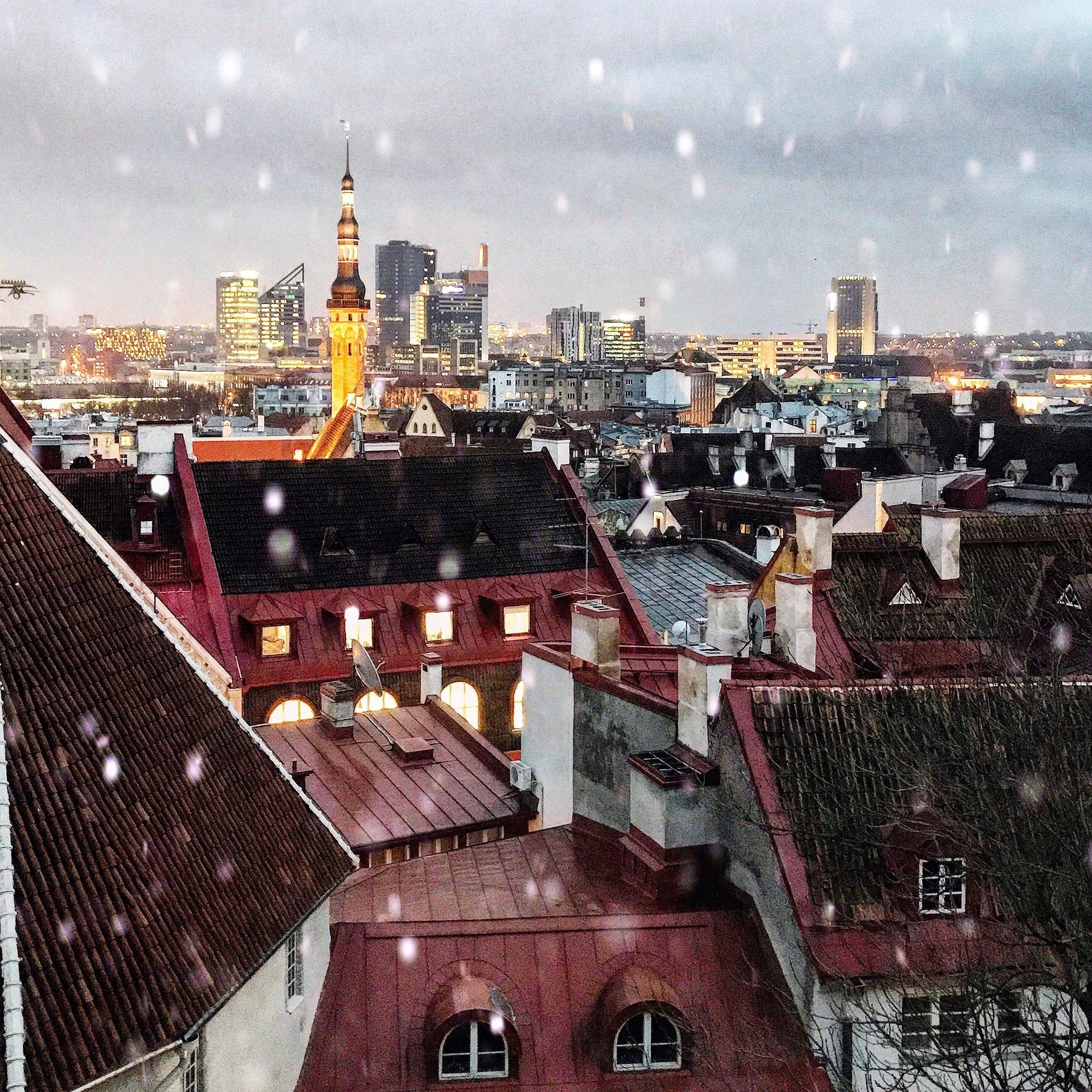
Estonia combines a compact medieval capital with forests, islands and a long Baltic coastline. I visited in collaboration with the Estonian Tourist Board, using Tallinn as a base for the city and northern landscapes.
First impressions of Tallinn
Tallinn is small enough to explore largely on foot. Its digital infrastructure is visible in everyday services, yet the first view most visitors encounter is historical: walls, towers and tiled roofs surround one of northern Europe’s best-preserved medieval centres.
Town Hall Square forms the heart of the Lower Town. We arrived in November, when seasonal stalls occupied the square and snow changed the colour of the streets. Above it, Toompea contains the parliament, viewing terraces and the Alexander Nevsky Cathedral, whose Orthodox architecture contrasts sharply with the surrounding buildings.
Outside the walls, contemporary business districts, residential neighbourhoods and new cultural spaces show a different side of the capital. In summer, Pirita’s promenade and beach extend the city towards the coast, while the Tallinn TV Tower offers a high view over the Gulf of Finland.
Lahemaa National Park
Lahemaa National Park is an accessible day trip from Tallinn. Its landscape includes forest, bogs, rocky shores and former manor estates. We followed the marked trail through Viru Bog, where a boardwalk crosses open wetland and a viewing tower gives a broader perspective over pools and low vegetation.
Southern Estonia and the coast
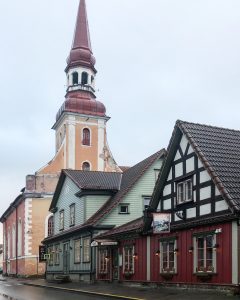
On our final day we travelled south to a small coastal town known as a summer destination. In the warmer months, beaches, cafés and water activities give the area a livelier rhythm; our winter visit revealed a much quieter promenade.
For food addresses in the capital, see the separate guide to restaurants in Tallinn.
The trip was organised in collaboration with the Estonian Tourist Board. The account and opinions remain my own.