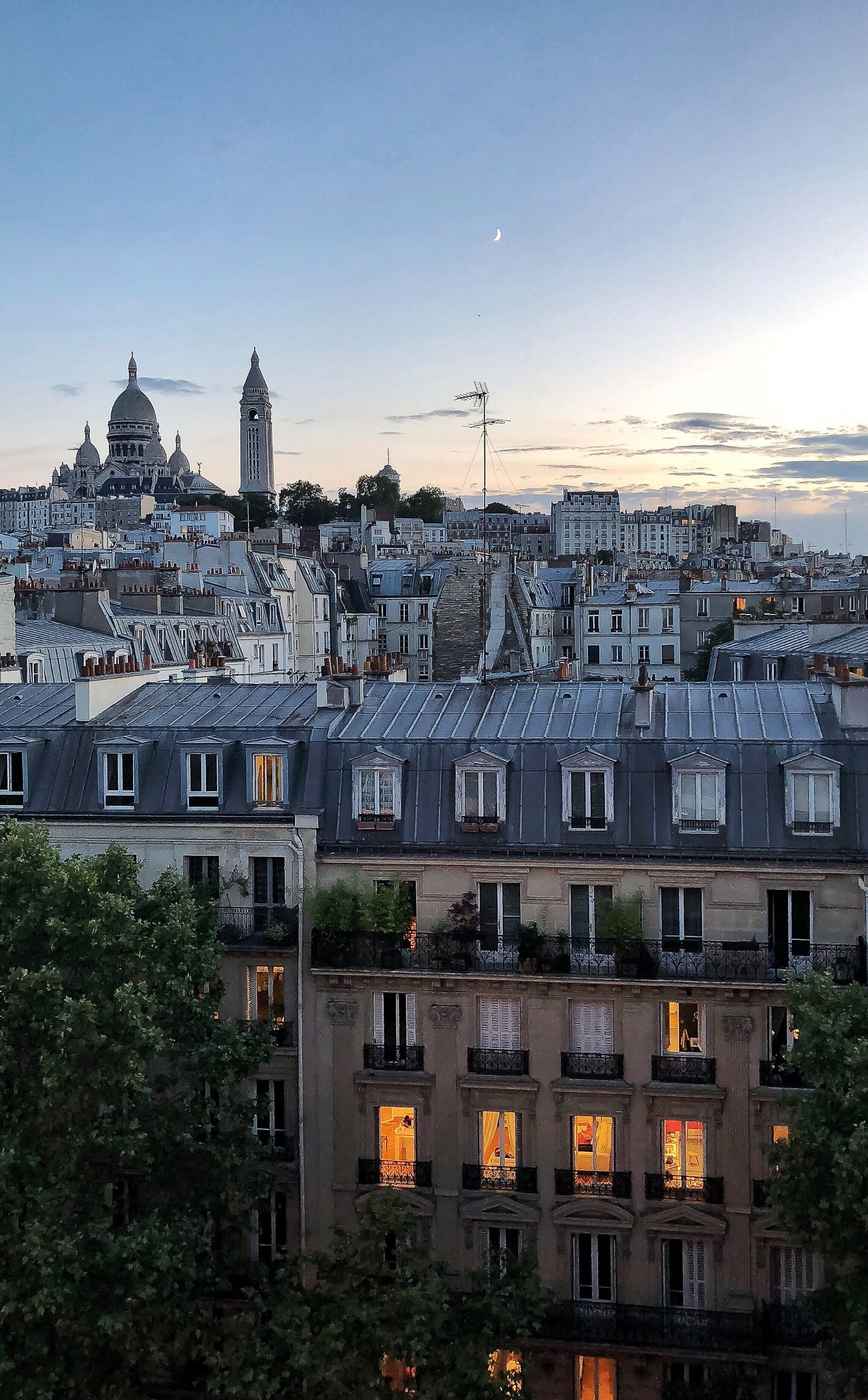
Paris contains more possible itineraries than a weekend can hold. This guide follows places chosen primarily for their streets, architecture and light, while keeping the city’s principal landmarks in view.
Montmartre
Montmartre’s steep streets combine cafés, former artists’ studios and small residential buildings. Sacré-Cœur provides a broad view from the hill, but the quieter lanes behind the basilica are equally important.
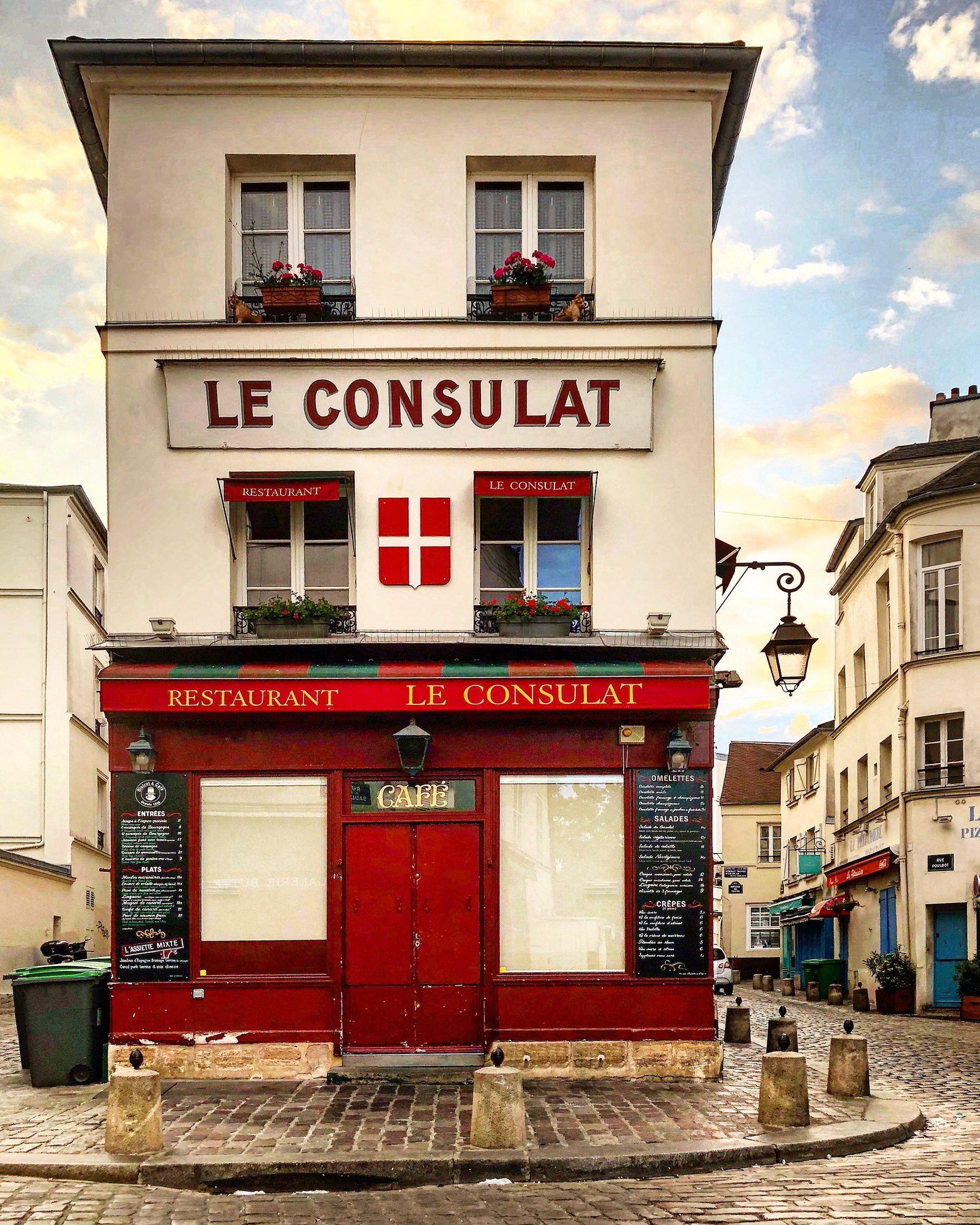
La Maison Rose occupies a recognisable corner among these streets. I explored the area with Paris City Vision, which helped connect familiar views with the neighbourhood’s history.
Classic landmarks and gardens
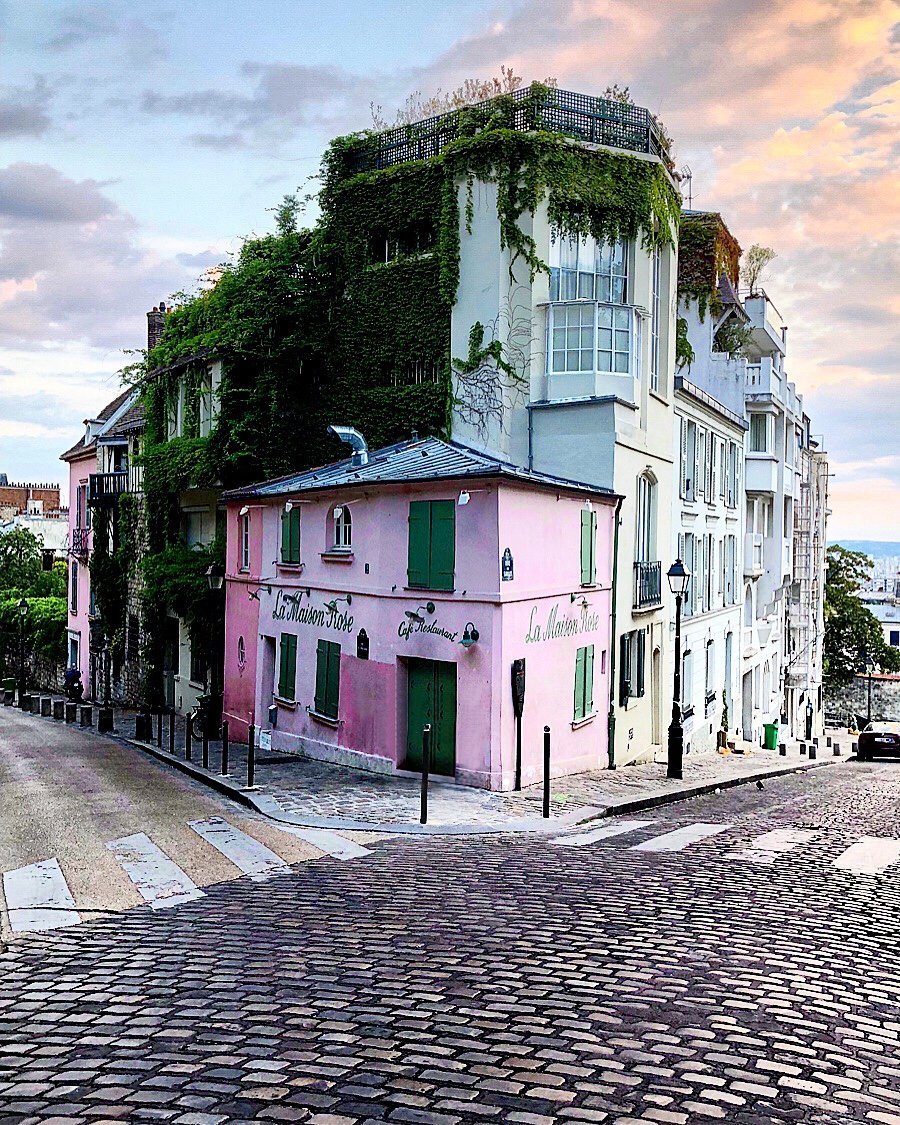
The Eiffel Tower can be approached from Trocadéro, the Champ de Mars or quieter streets such as Rue de l’Université. The Arc de Triomphe closes the western end of the Champs-Élysées, while Luxembourg Gardens offer geometric paths and planted spaces around the palace.
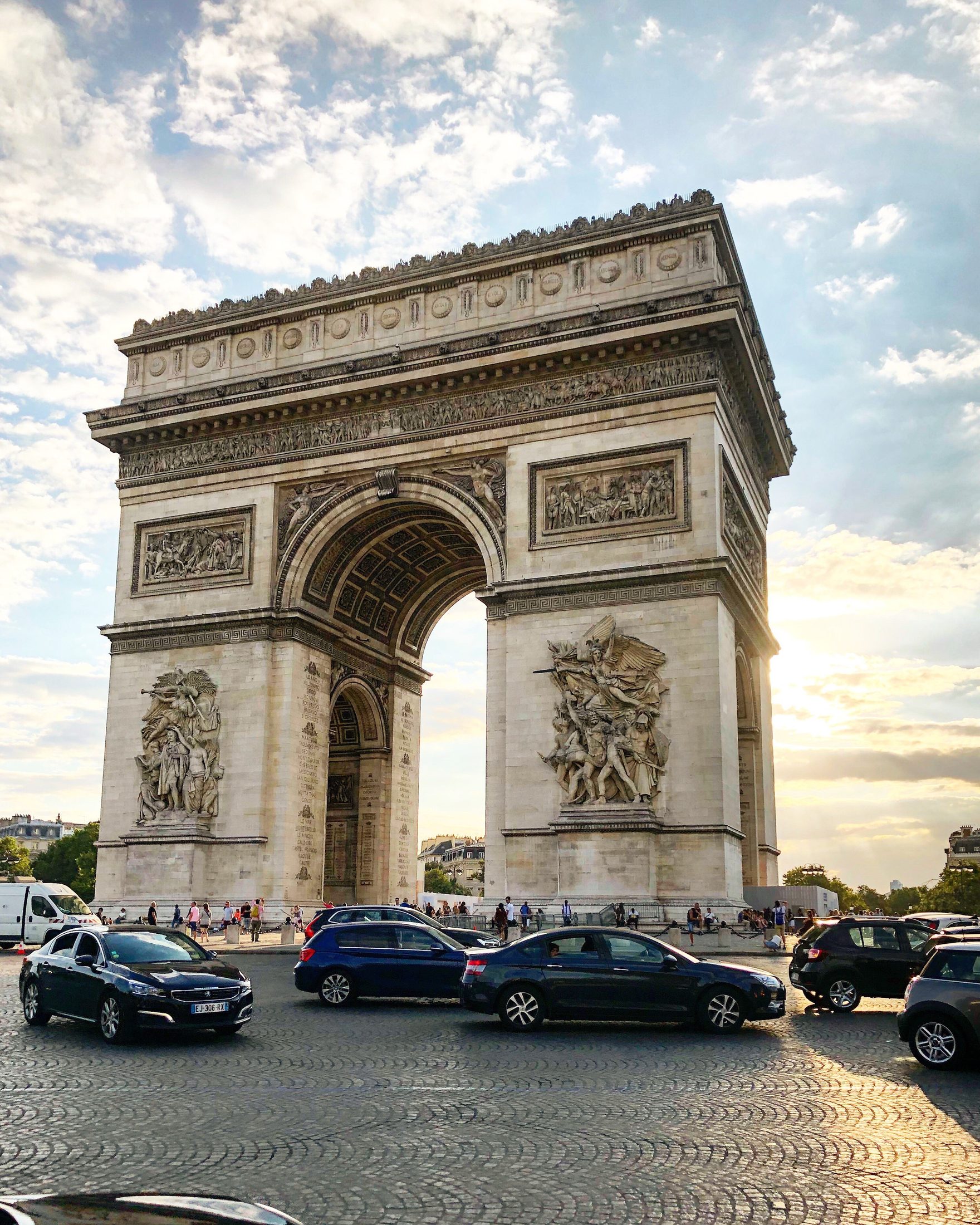
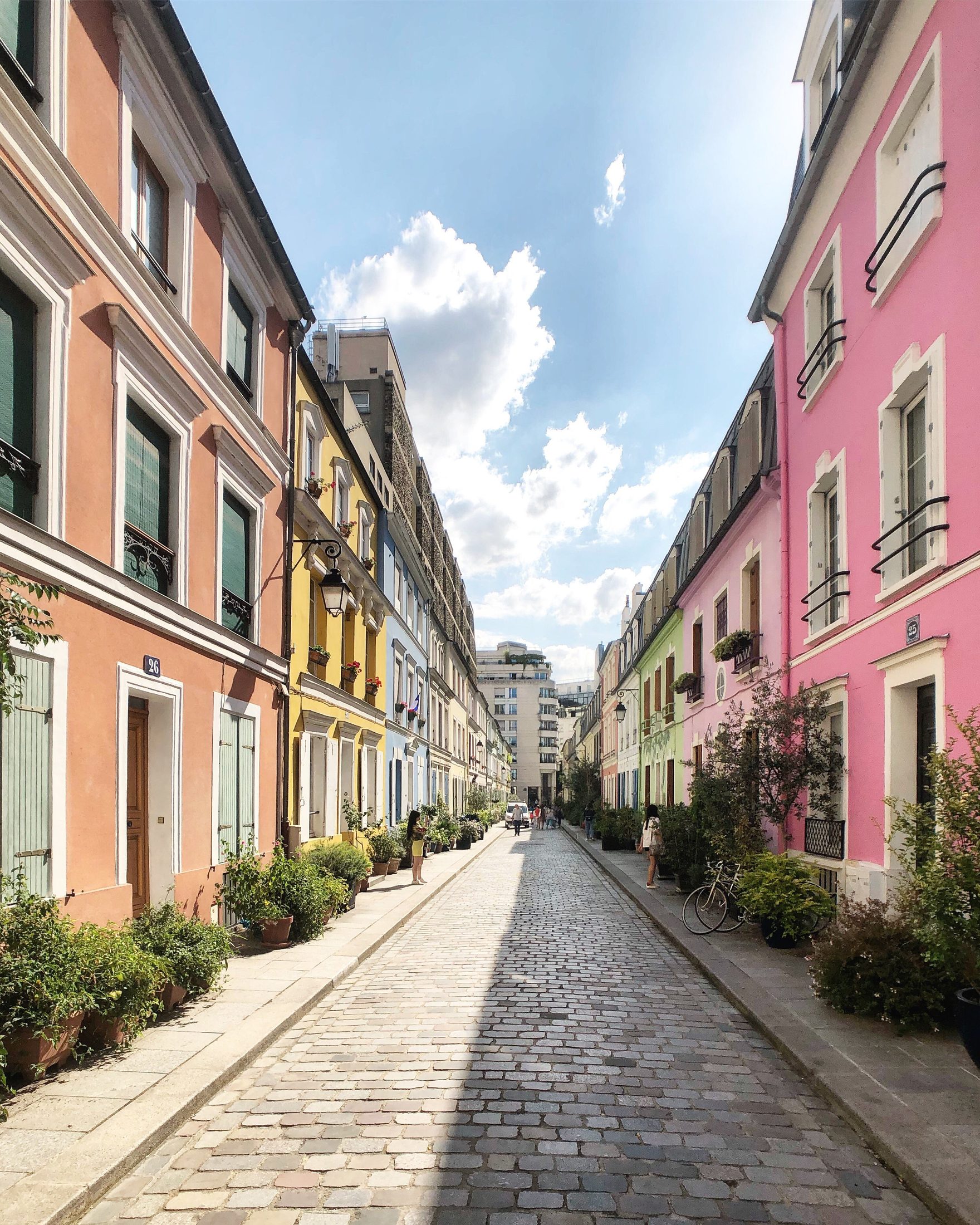
Rue Crémieux is known for colourful houses, but it is also a residential street. Photograph discreetly and respect requests from residents.
Around Notre-Dame
Shakespeare and Company stands on the Left Bank near Notre-Dame and continues the tradition of an English-language literary bookshop in Paris. Nearby, small lanes, Odette and Au Vieux Paris d’Arcole offer more intimate façades around the Île de la Cité.
I reached Paris from Brussels using an Interrail pass. For another stay in the city, see L’Épicerie.