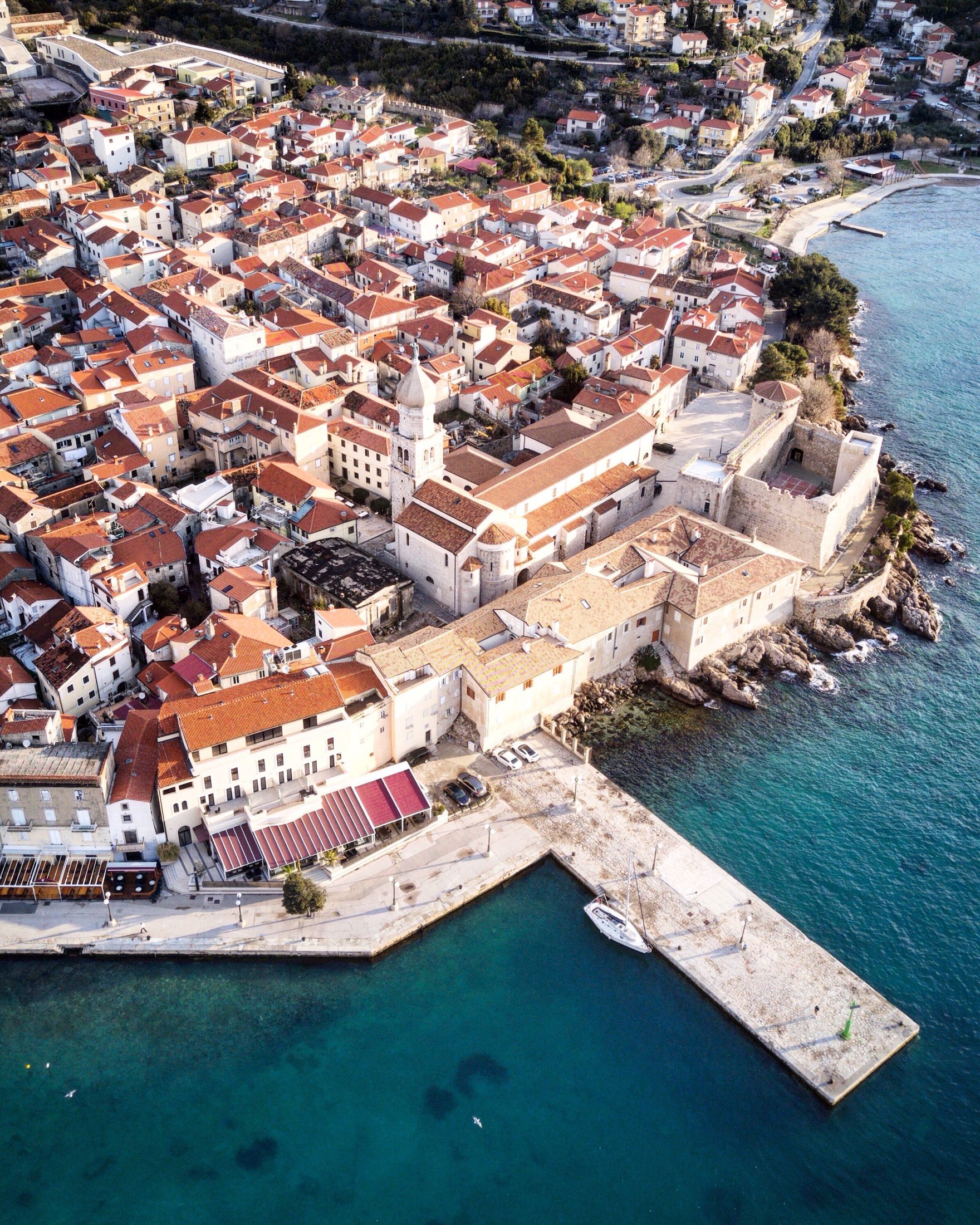
We travelled to Krk from Italy for an Easter weekend with friends. A bridge connects the island to the Croatian mainland, making it practical for a road trip and easy to explore independently over several days.
The northern and eastern coasts are rockier and more exposed to the bora; the southern and western sides are more sheltered and greener. Driving between them reveals how quickly the landscape changes across a relatively compact island.
Krk Town
The island’s principal town retains medieval walls around Vela Placa and a centre of narrow stone streets leading towards Frankopan Castle. The harbour promenade is particularly pleasant early in the morning or towards evening.
Vrbnik
Vrbnik stands on a cliff above the sea. The clearest view is from below, near the small harbour, reached either by car or along the descending panoramic path. The village is compact, with beaches and coves nearby.
Baška
Baška is one of the island’s best-known resorts. Its long beach lies beneath bare mountain slopes that shelter parts of the bay, while cafés and restaurants follow the waterfront around the harbour.
Krk is now in the euro area, so older advice about changing money into kuna no longer applies. Road, ferry and seasonal service information should be checked before travelling.