Greece is closely associated with summer, but its cities, larger islands and thermal destinations remain relevant well beyond July and August. Travelling in spring or autumn usually means softer temperatures and fewer visitors, although ferry and seasonal services require closer planning.
Athens
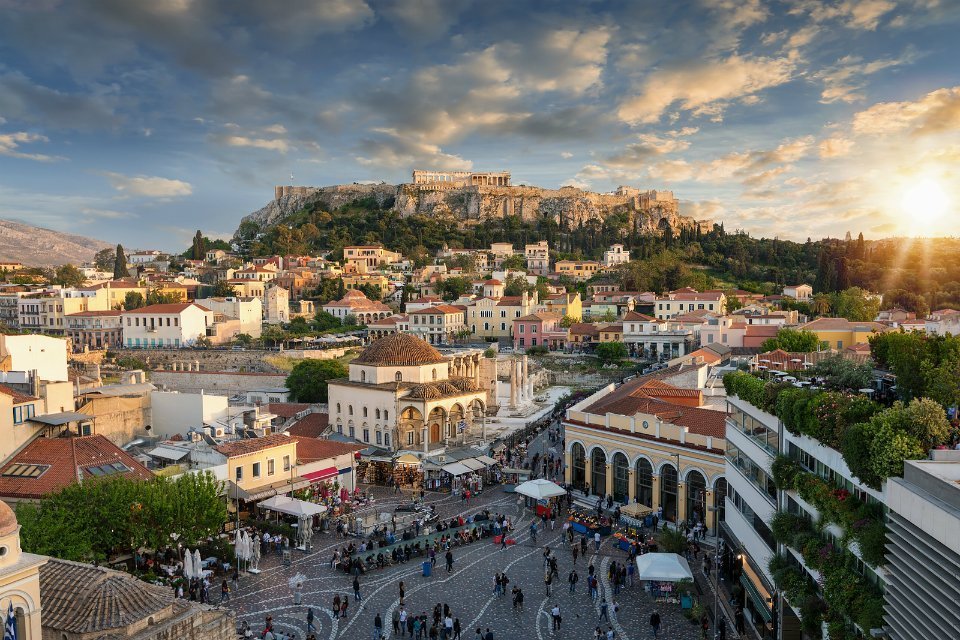
Athens deserves more than a stopover on the way to the islands. The Acropolis anchors a walkable historic area surrounded by Koukaki, Thissio, Monastiraki, Plaka and Psyrri. Ancient sites sit beside cafés, markets and contemporary city life, making the capital practical in every season.
Evia
Evia is connected to mainland Greece by bridges and ferry routes. Edipsos, in the north of the island, is known for thermal springs used since antiquity. Beyond wellness facilities, the island includes beaches, waterfalls, mountain roads and archaeological sites that make a car useful.
Corfu
Corfu lies in the Ionian Sea and has a permanent local population, so Corfu Town remains active outside summer. Byzantine, Venetian, French and British periods have left fortifications, arcades, churches and civic buildings across the historic centre. Winter is wetter, but it also reveals a greener and less crowded island.
Crete
Crete is large enough to require a regional approach. Chania, Rethymno, Heraklion and Lassithi each connect northern and southern coasts with mountain villages and archaeological sites. In summer, choose one area rather than trying to cover the entire island; in cooler months, city stays, food and inland routes become more practical than beach-hopping.
Before an off-season trip, check ferry schedules, accommodation opening dates and local transport directly with current operators.