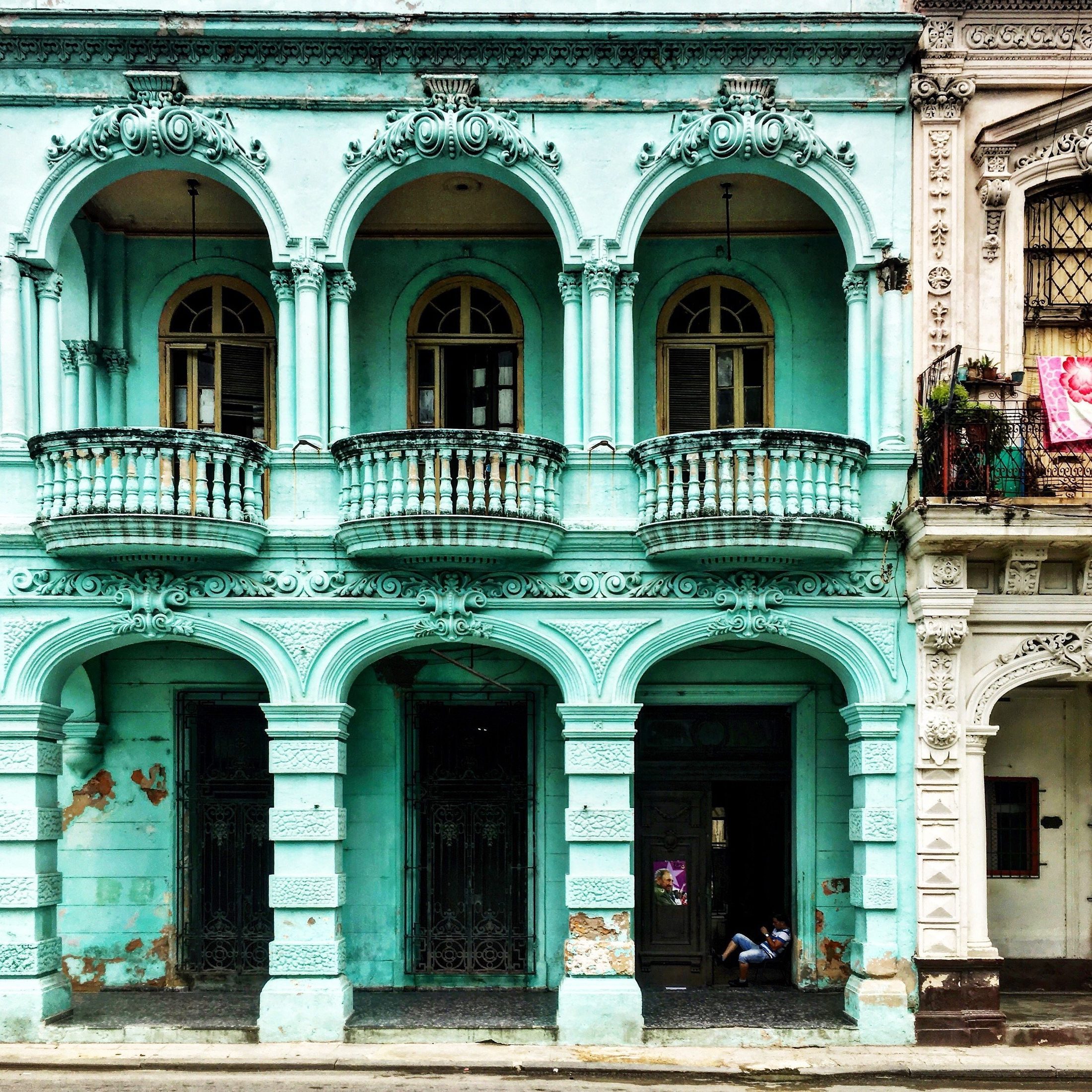
Our first stop in Cuba was Havana. Weathered façades, classic cars and layers of colonial and twentieth-century architecture shape the city’s visual identity, but it is the movement in the streets—music, conversations, vendors and daily routines—that gives those familiar images their context.
We took a ride in a classic car along the seafront, with music playing and air moving through the open windows. Elsewhere, walking was the best way to notice details: coconuts opened to order, worn doorways and the changing colours of buildings from one street to the next.
After two days in Havana, we travelled to Varadero. The long beach offered time to slow down, but we also used the coast as a base for excursions to other parts of the island.
Cienfuegos and Trinidad
A private day tour connected Cienfuegos and Trinidad. Cienfuegos is organised around its bay and has a more formal urban character, with broad streets and architecture influenced by its nineteenth-century development.
Trinidad, inscribed on UNESCO’s World Heritage List, is a well-preserved colonial town of cobbled pedestrian streets and low, colourful buildings. At Taberna La Canchánchara we tried the drink associated with the city: rum, honey, lemon and water served in a small ceramic cup.
Río Canímar and the Yumurí Valley
Another excursion took us inland towards Río Canímar, where dense vegetation surrounds the water, and to Playa Coral for snorkelling. We continued into the Yumurí Valley, stopping for lunch and seeing coffee and sugar-cane cultivation at closer range.
This first journey covered only part of Cuba. The contrast between Havana, the coast, colonial towns and greener inland areas made it clear that the island cannot be reduced to classic cars and beaches—and left several regions for a future visit.