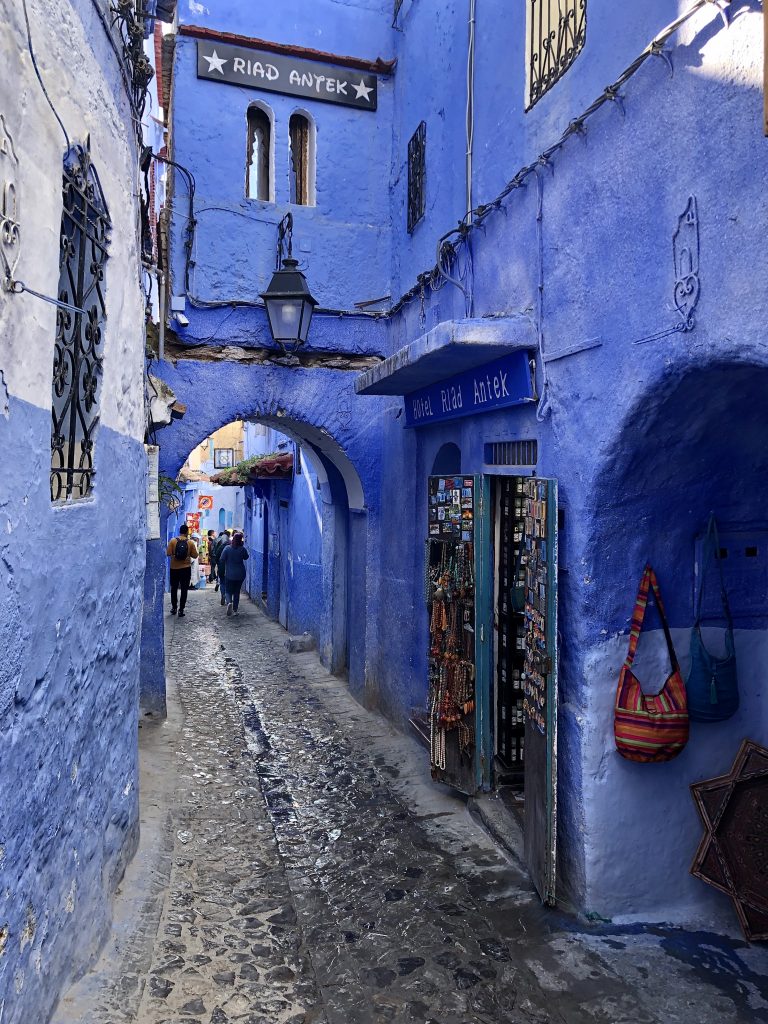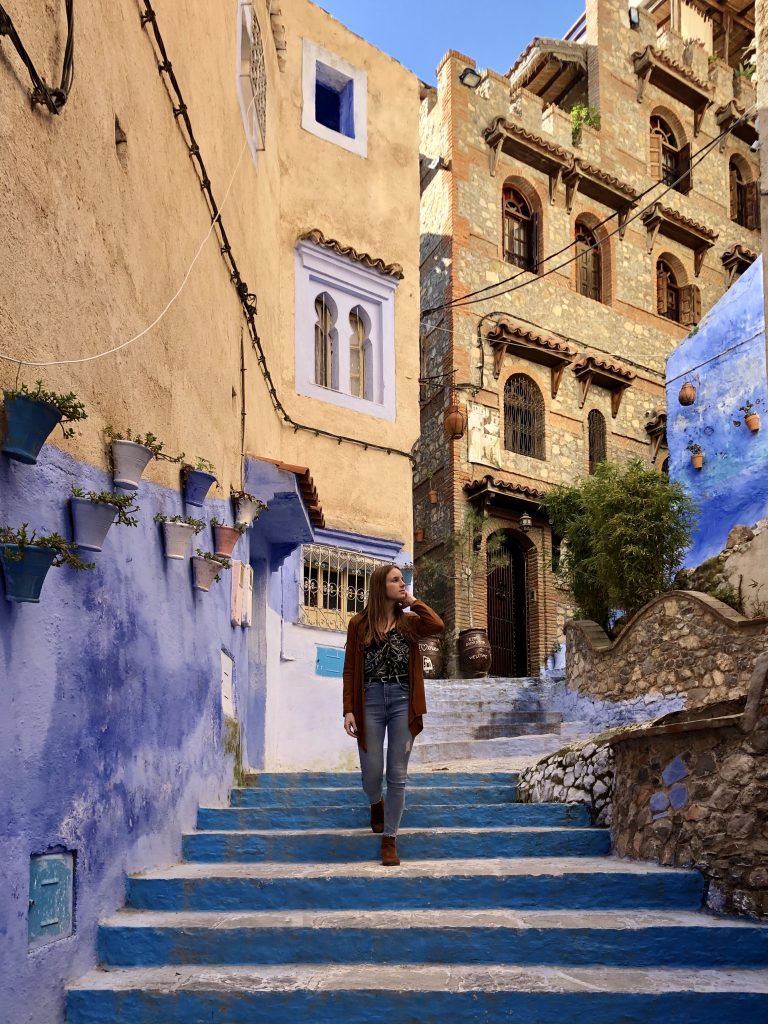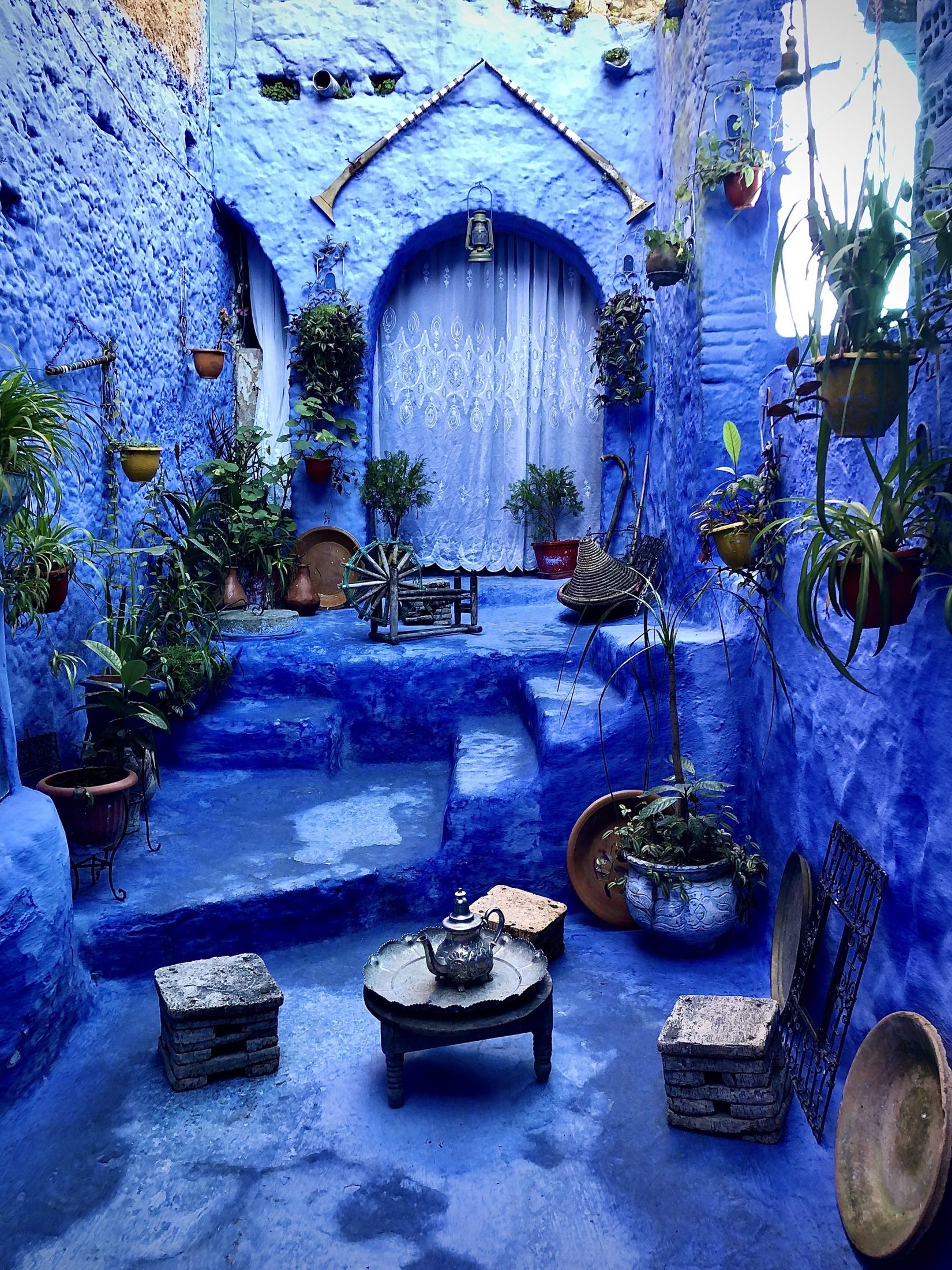
Chefchaouen sits in the Rif Mountains and is known for the blue-painted buildings and narrow lanes of its medina. Andalusian and Moroccan influences meet in the architecture, creating a centre that feels distinct from Morocco’s larger cities.
We travelled to Chefchaouen from Fez, which I wrote about in a separate city guide. Public buses, organised excursions and private transfers connect the two places. We chose the bus: the journey took around four hours and passed through villages and changing rural landscapes.
Why is Chefchaouen blue?
There is no single agreed explanation for the blue walls. Some accounts connect the colour to Jewish residents who settled in the city, interpreting blue as a reminder of the sky and the divine. Other local explanations suggest that the shades help keep buildings cool or discourage mosquitoes. Whatever their origin, repeated layers of blue have become inseparable from Chefchaouen’s identity.
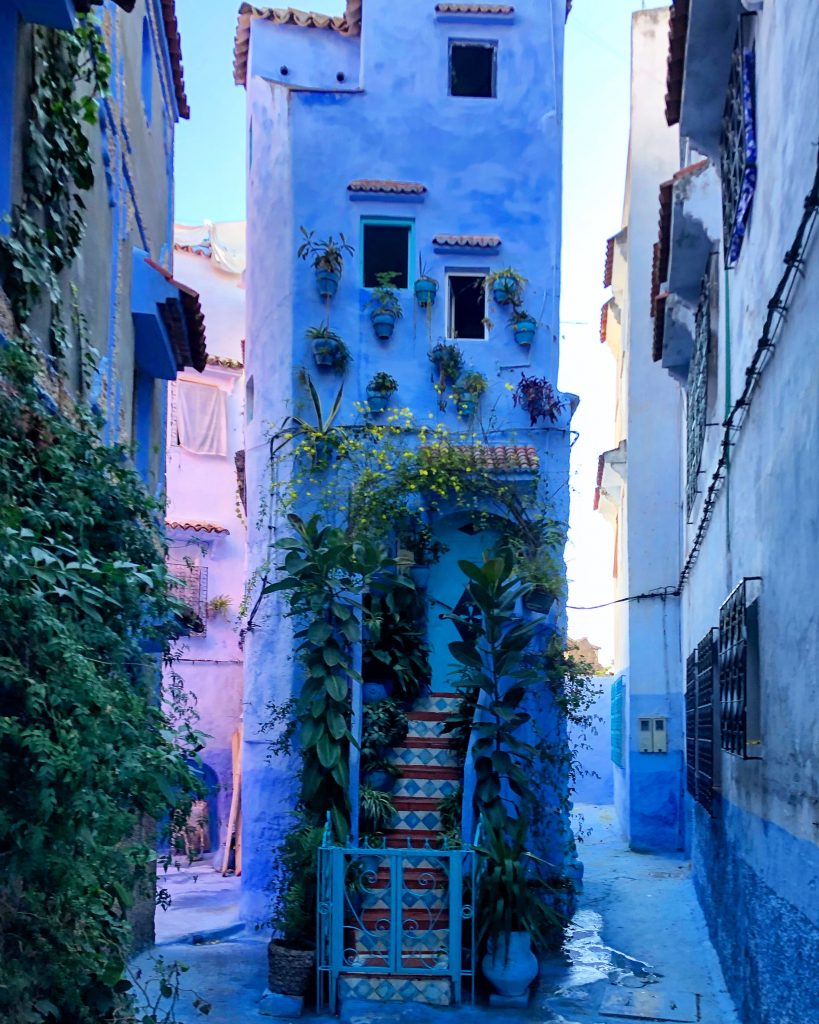
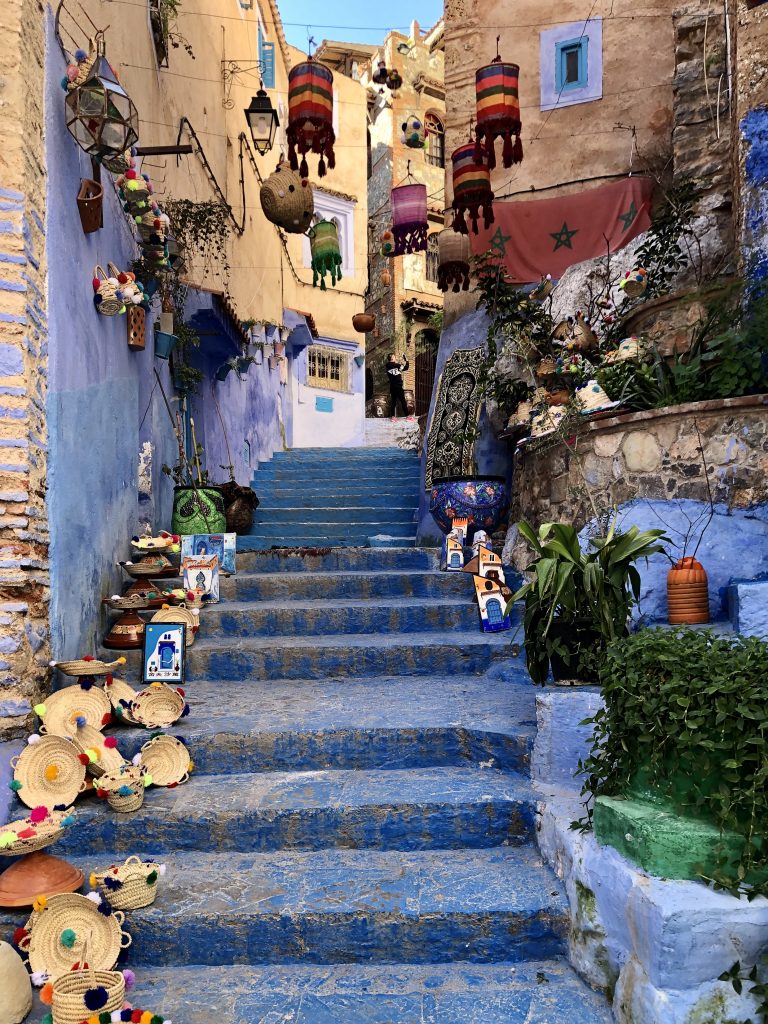
The best way to explore is simply to walk through the medina. It is compact enough to navigate without a strict route, and each turn introduces a different combination of stairs, doorways and painted walls. Staying overnight is worthwhile: early in the morning the streets are quieter, deliveries begin and the city feels less organised around day visitors.
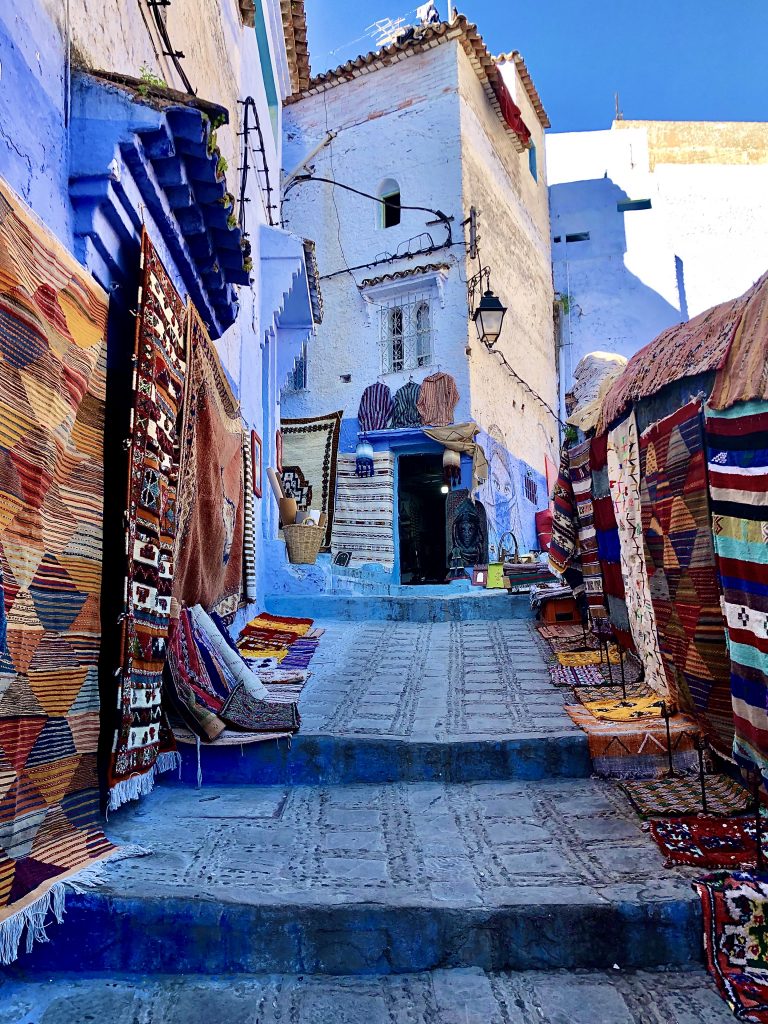
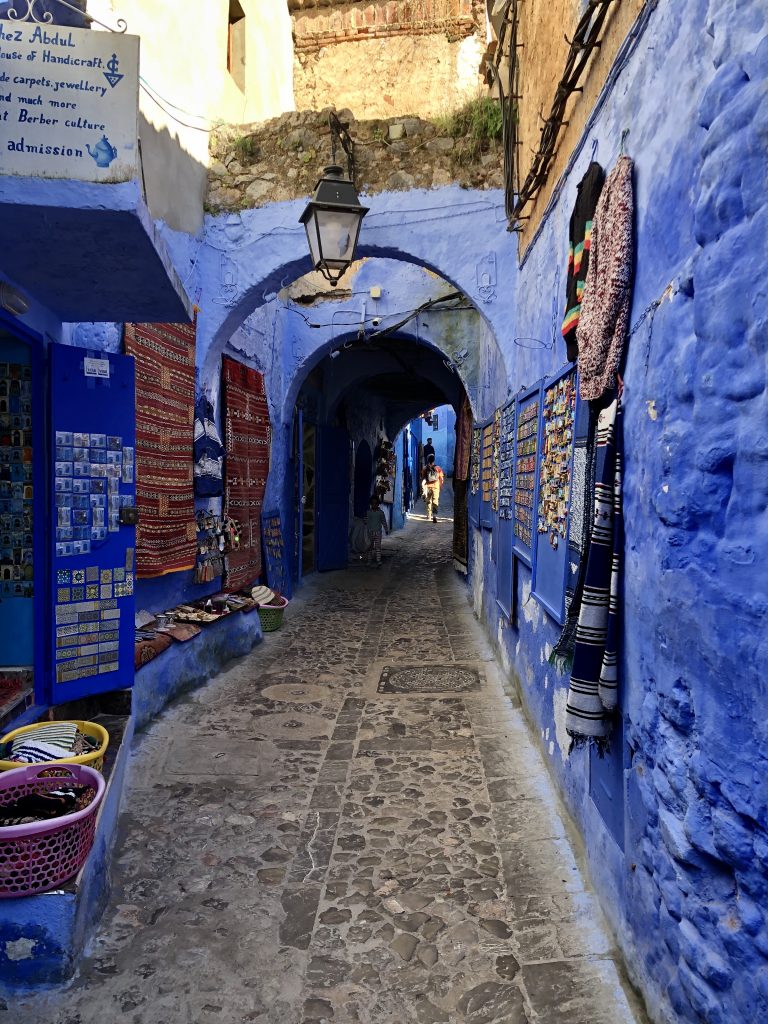
Shopping is generally calmer than in some of Morocco’s larger medinas. Look for textiles and other crafts associated with Berber communities in the surrounding Rif region, while remembering that not every item sold in the centre is locally made.
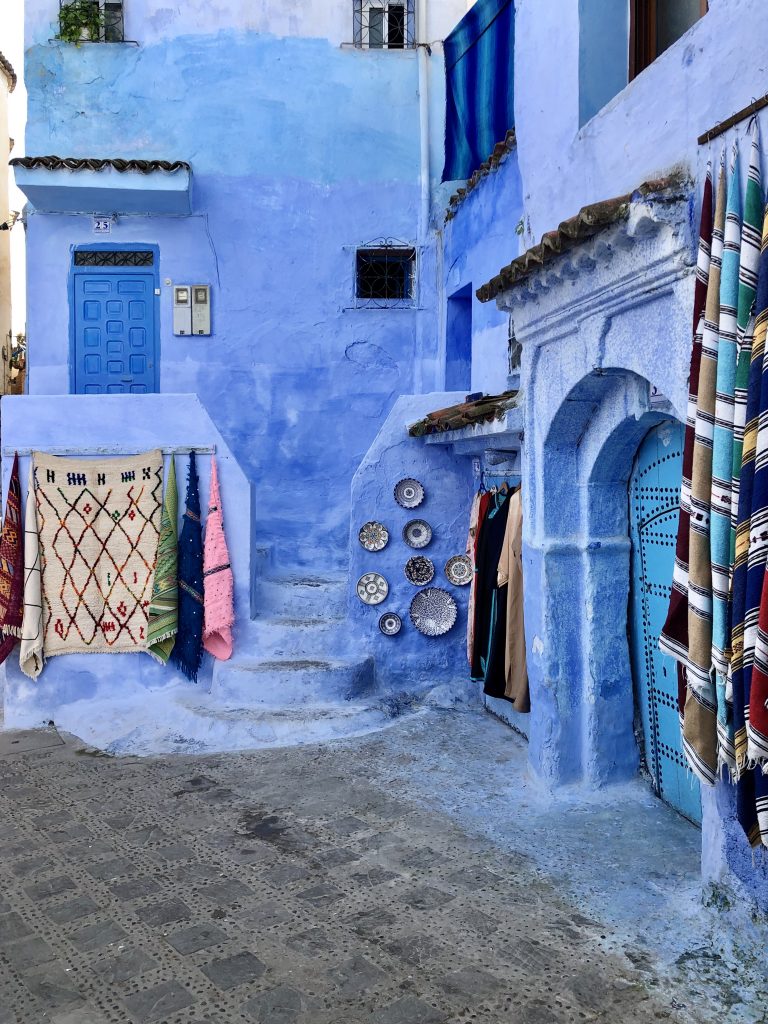
For photography, slow down rather than searching for a single famous viewpoint. Doorways, staircases and small squares change throughout the day as the light moves across different shades of blue.