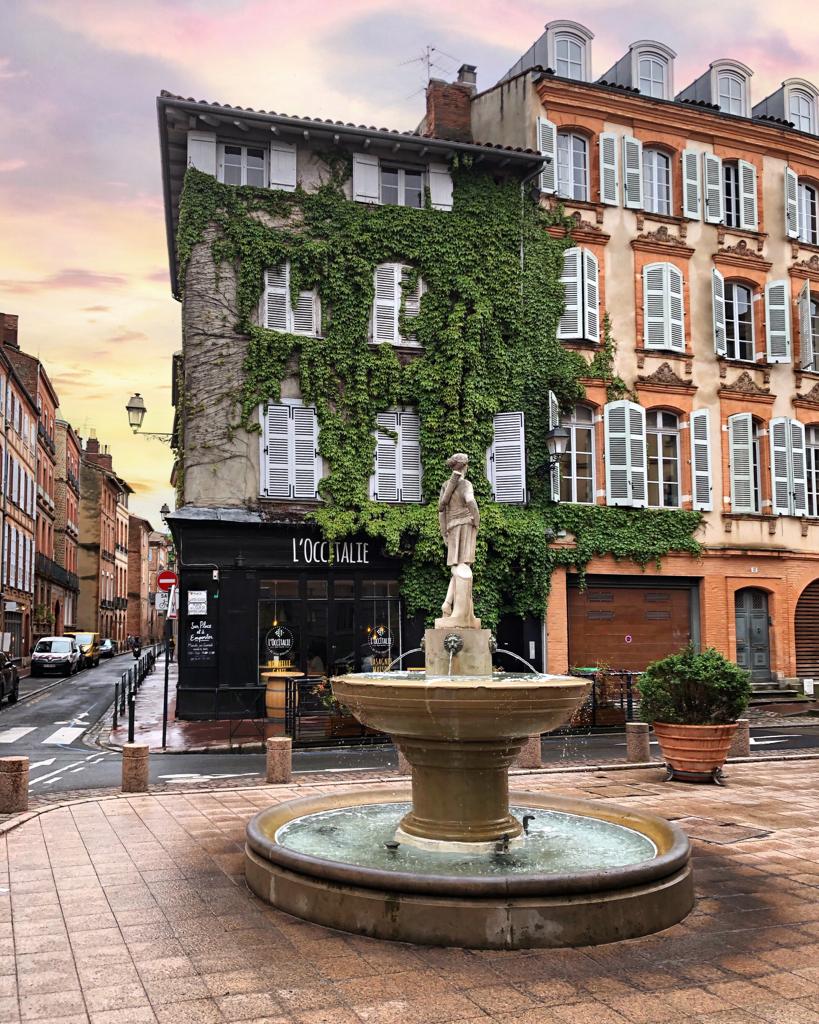
Toulouse is known as La Ville Rose because of the warm colour of its exposed brick. Even under cloudy skies, the façades shift between pink, orange and ochre, giving the city a visual identity unlike most other French destinations.
With support from the Toulouse Tourist Office, we explored the city on foot—still the best way to understand its streets, architecture and relationship with the Garonne.
Why visit Toulouse
Toulouse sits in south-western France, between the Pyrenees and the Mediterranean. Its heritage includes the Canal du Midi and monuments connected to the Santiago de Compostela routes, while its contemporary identity is closely linked to aeronautics and space.
Parks, riverside paths and public squares soften the urban fabric. The city is large enough to offer substantial museums and restaurants, but the historic centre remains easy to navigate on foot.
What to see
Place du Capitole is the civic heart of Toulouse. Arcades, cafés and the long façade of the Capitole frame an open square that works as a natural starting point.
Rue du Taur connects the square with the Basilica of Saint-Sernin and is lined with bookshops, crêperies and small restaurants. Nearby, the covered Marché Victor Hugo brings together cheese, meat, fresh pasta and prepared food.
The Cathedral of Saint-Étienne is striking because its architectural sections do not align conventionally. Successive Romanesque and Gothic campaigns created an interior that feels irregular but memorable.
The Hôtel d’Assézat houses the Fondation Bemberg, while the Musée des Augustins occupies a Gothic convent. Both offer a change of pace from the streets and reveal the wealth associated with Toulouse’s past.
Along the river, Pont Neuf is the city’s oldest surviving bridge. The view is particularly effective from the riverbanks and from Place Saint-Pierre, where brick architecture meets the water.
Where to eat
Ma Biche sur le Toit occupies the rooftop of Galeries Lafayette. Its elevated position gives a broad view across the city and makes it a useful stop for breakfast, lunch or an evening drink.
Toulouse is best approached at street level: follow the brick façades, cross the Garonne and leave room for markets and courtyards between the major landmarks.