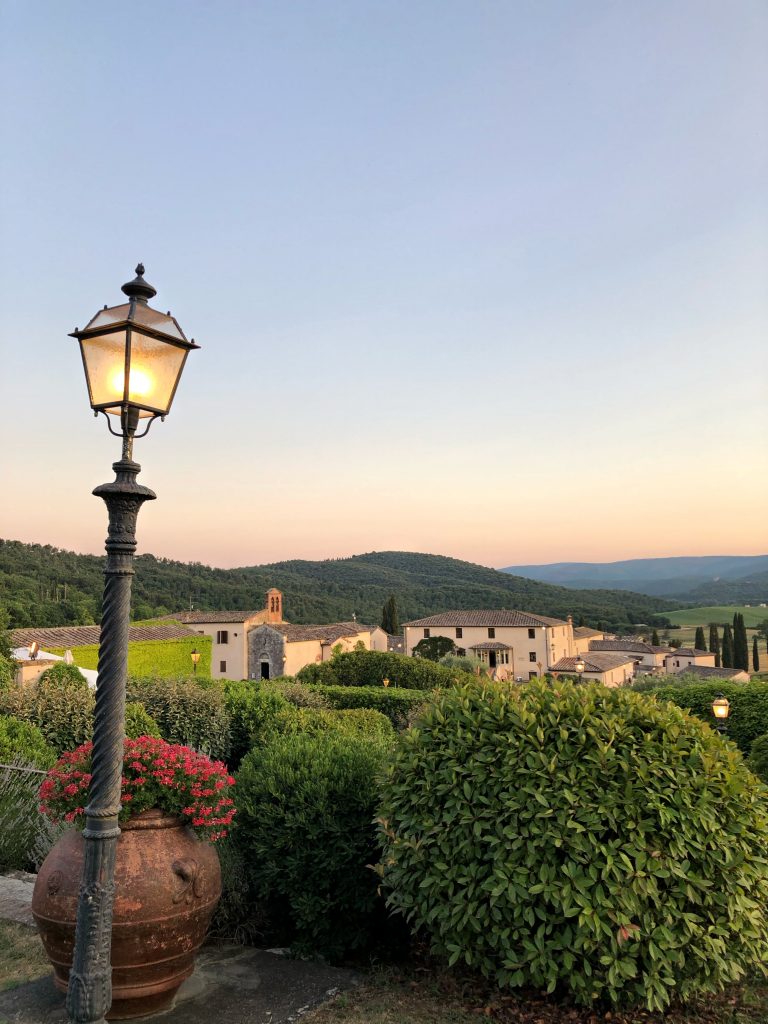
La Bagnaia occupies a historic group of buildings in the countryside near Siena. Stone façades, broad lawns and views across the Tuscan hills give the property the scale of a small village rather than a conventional hotel.
Staying at La Bagnaia
The resort extends across Borgo La Bagnaia and Borgo La Filetta. Its historic architecture has been adapted for hospitality while retaining courtyards, lanes and the sense of moving through an old rural settlement.
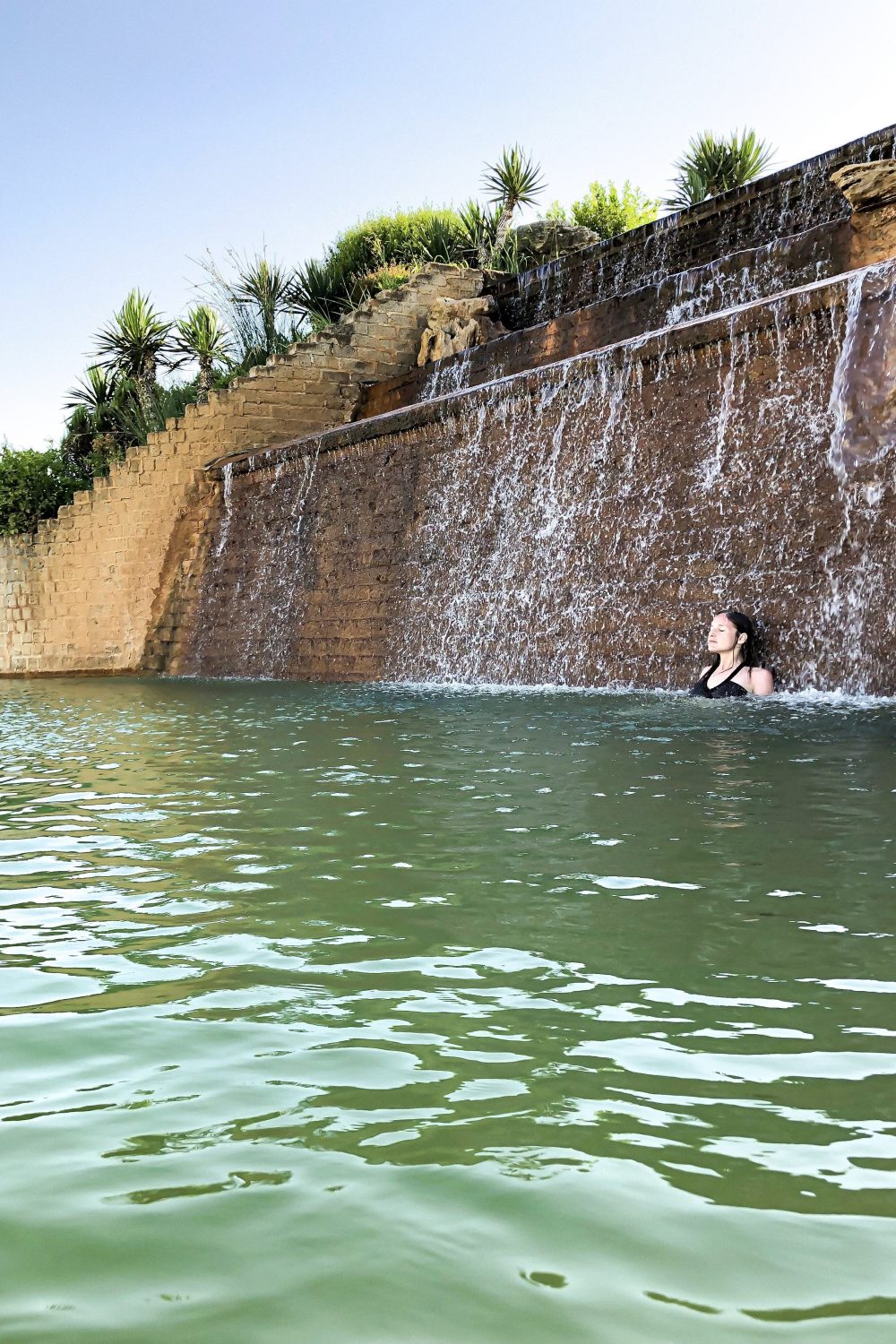
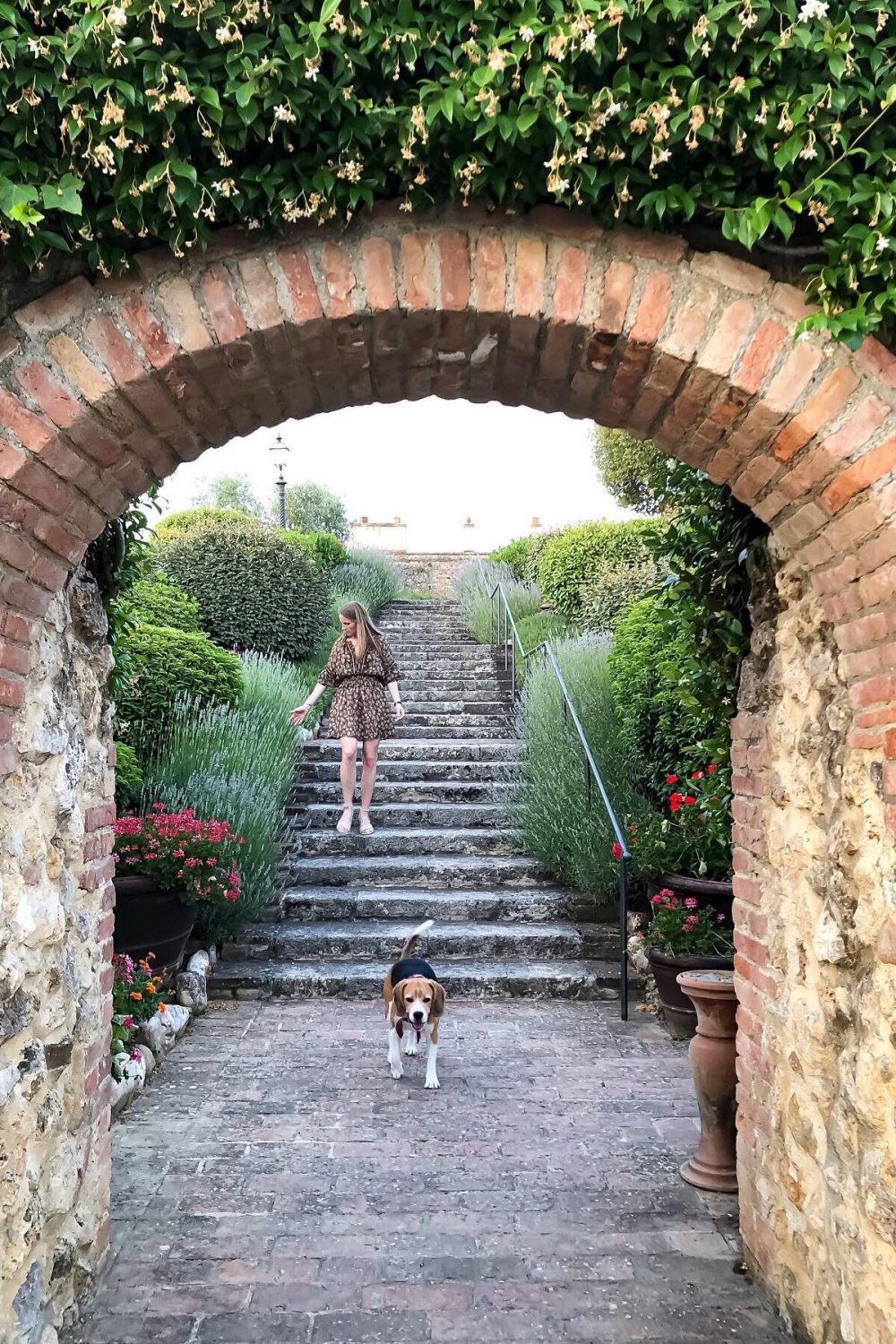
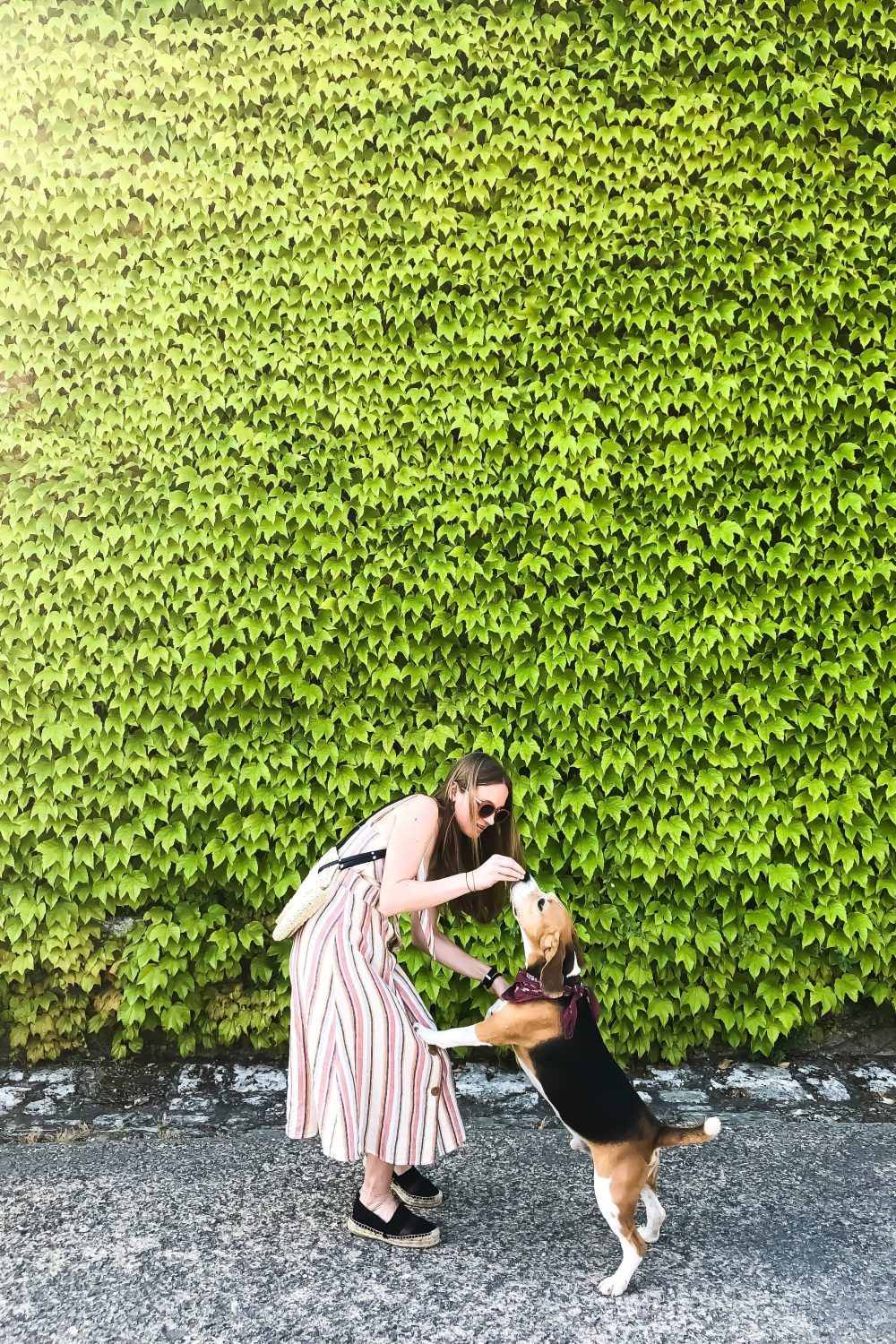
The grounds include an 18-hole golf course designed by Robert Trent Jones Jr. and a spa with indoor and outdoor pools, a sauna and a Turkish bath. The extensive green spaces also made the stay comfortable with our dog, Charlie.
The property works best as a quiet base from which to explore central Tuscany. Days can be divided between Siena and the surrounding towns, with time at the resort before or after each visit.

Siena
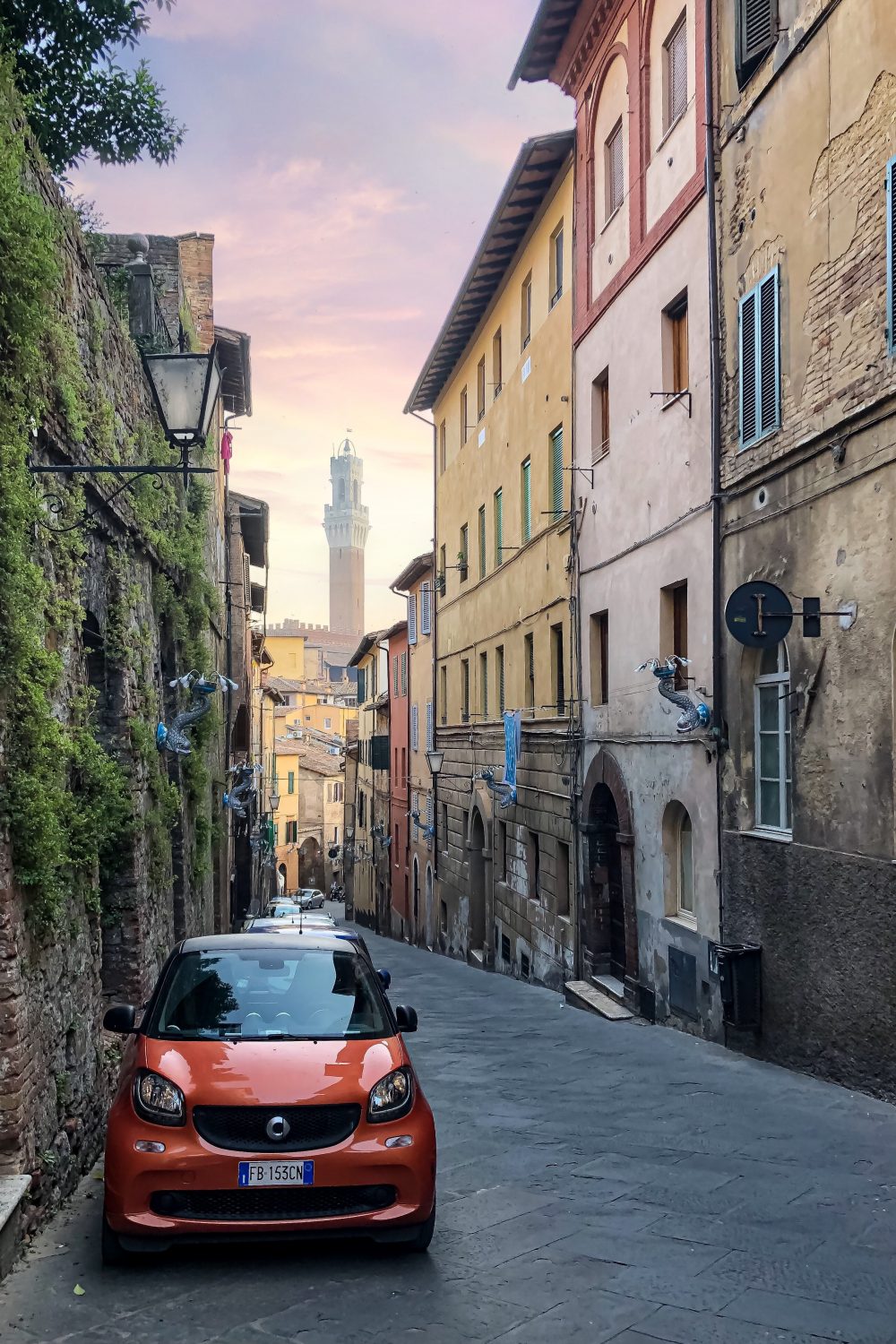
Siena is the natural first stop. The historic centre is largely pedestrian, and its main landmarks sit between Piazza del Campo and Piazza del Duomo.
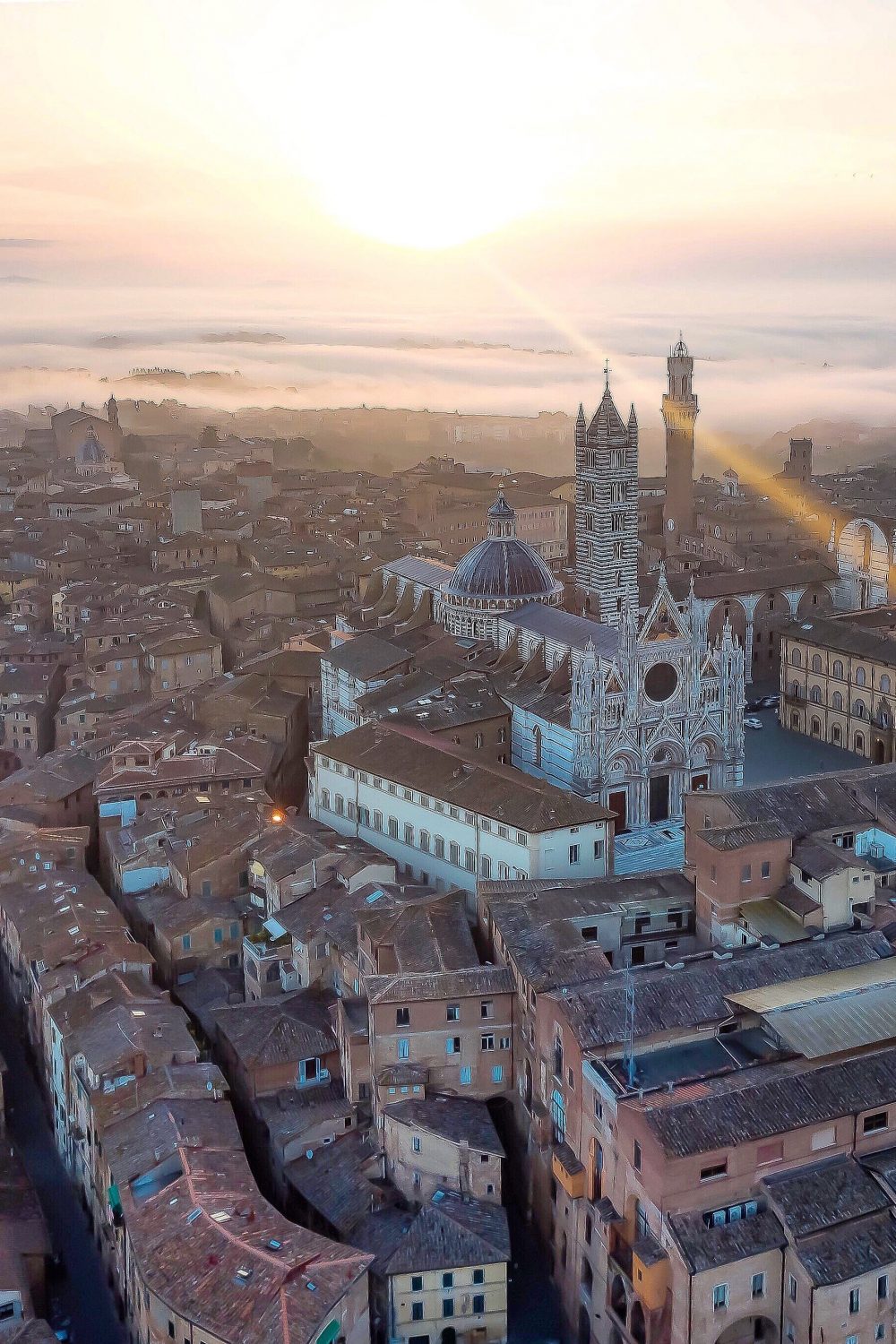
Piazza del Campo is defined by its shell-shaped plan, brick paving and the façades that curve around it. The Torre del Mangia rises above the square, while the nearby cathedral complex includes the Duomo, the crypt and the Piccolomini Library.
Beyond the monuments, Siena’s identity is inseparable from its seventeen contrade and the Palio. Even outside the race days, their symbols and boundaries remain visible throughout the city.
Monteriggioni and San Gimignano
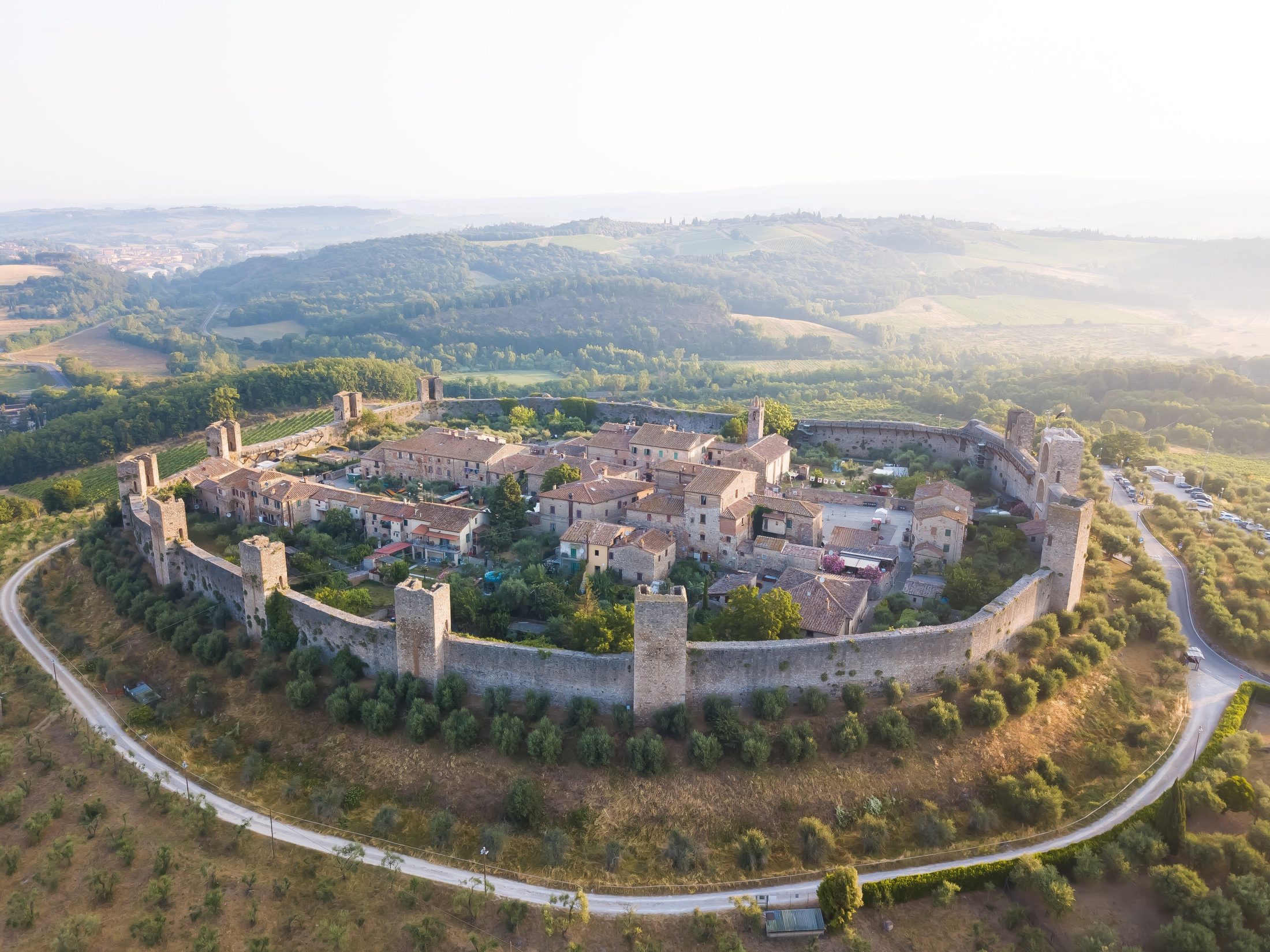
North of Siena, Monteriggioni is a compact fortified village encircled by medieval walls and towers. Its small scale makes it an easy stop, but the approach across the countryside is part of its appeal.
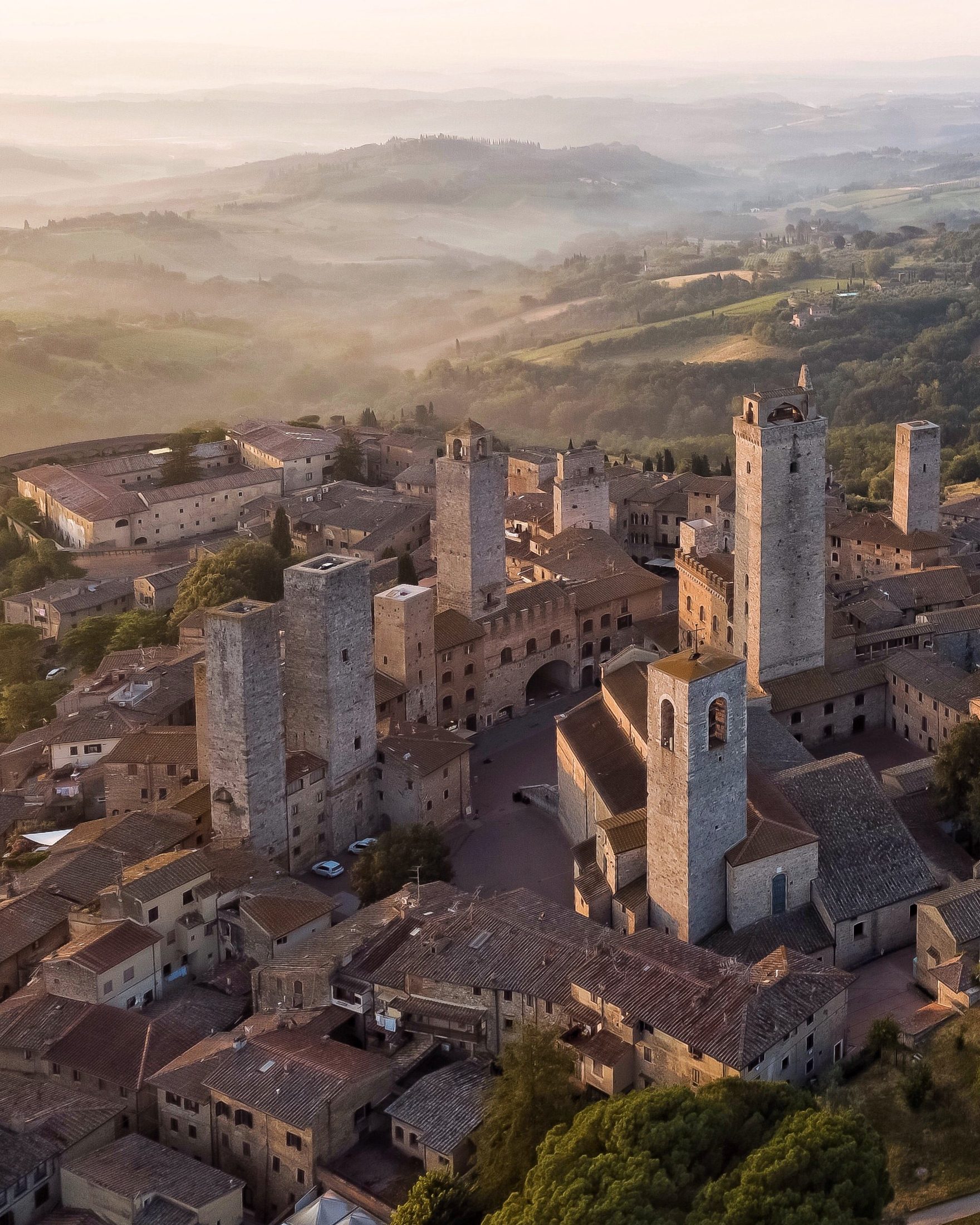
San Gimignano offers a different skyline. Its medieval towers recall the town’s period of commercial prosperity and its position on the Via Francigena. The main route still runs through the centre, linking stone streets, squares and viewpoints across the surrounding hills.
Combining these towns with a stay in the countryside creates a balanced itinerary: art and architecture during the day, followed by quieter evenings among the Tuscan hills.