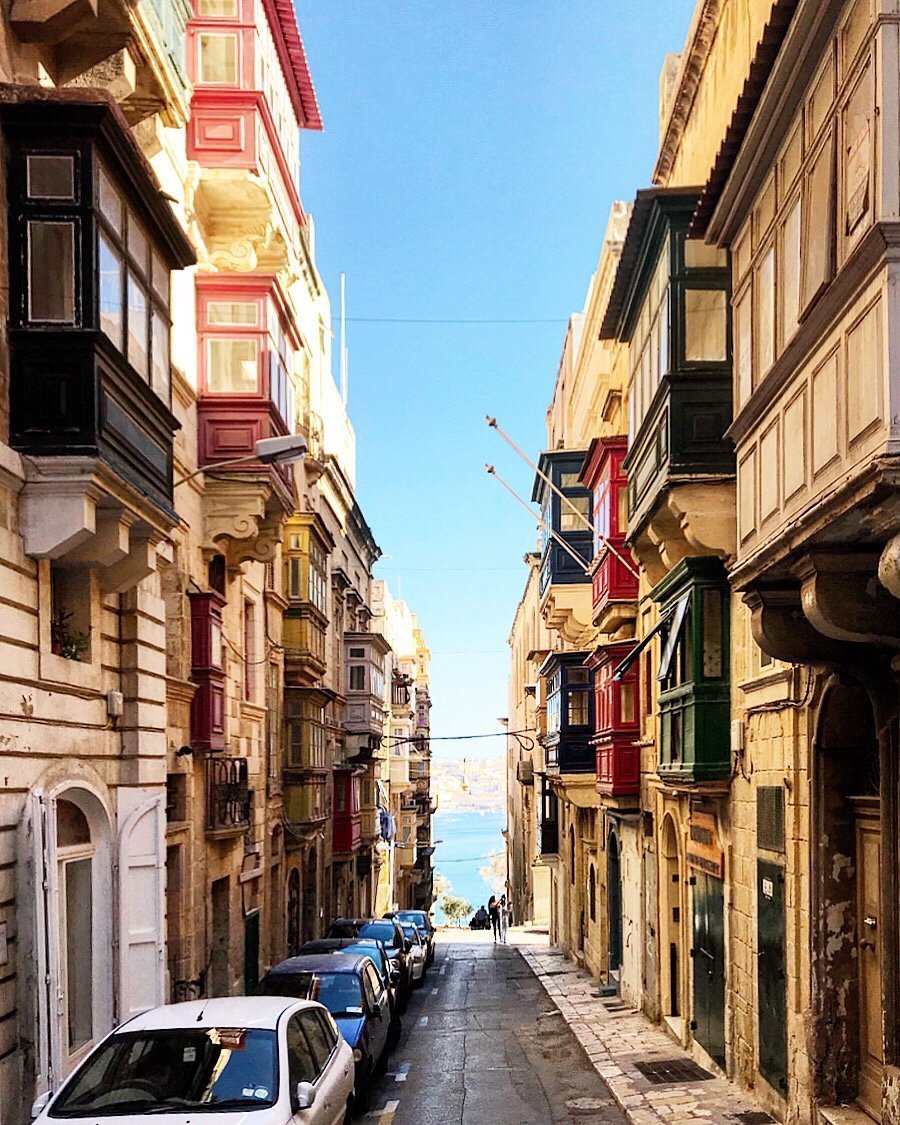
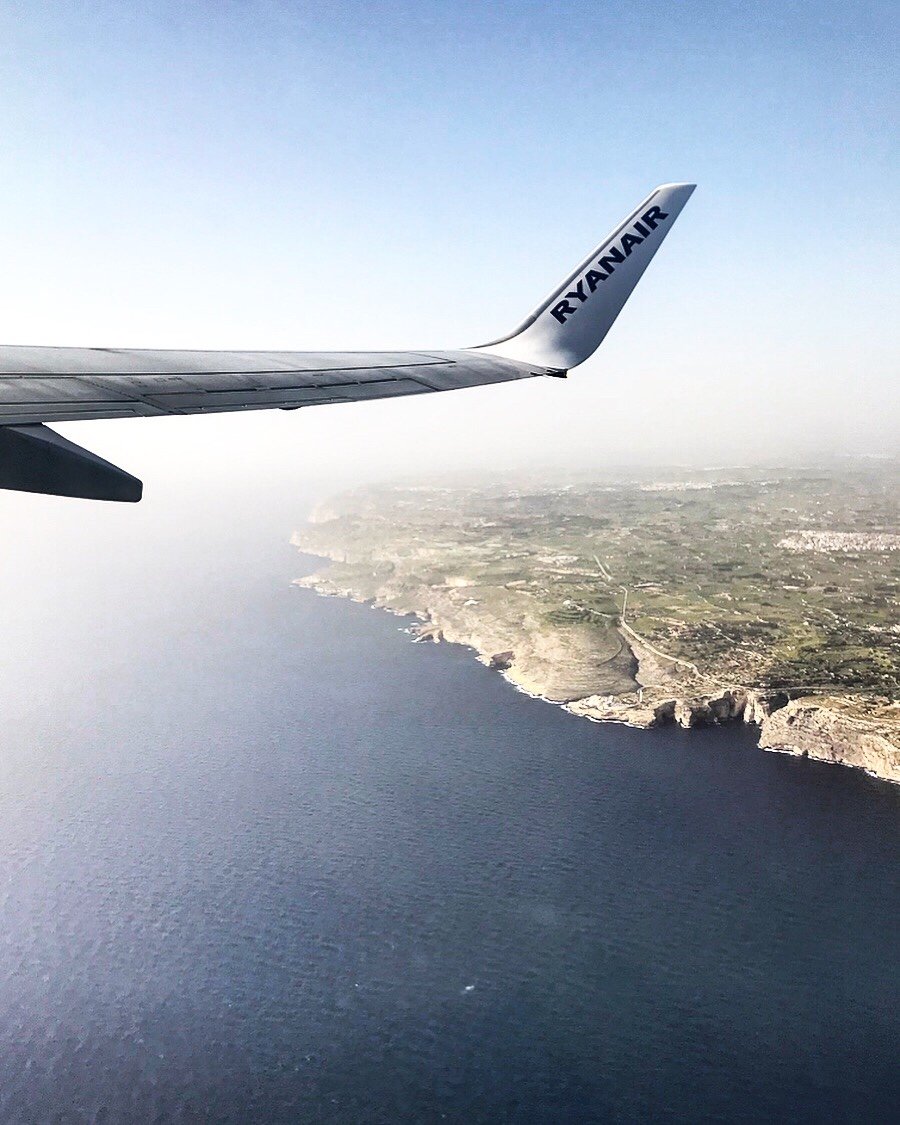
Malta lies between Sicily and North Africa. Maltese and English are the official languages, and the island’s architecture reflects centuries of Mediterranean exchange. Distances are short, but dense traffic can make public-transport journeys slower than expected.
Valletta and the Three Cities
Valletta occupies a peninsula between two harbours. Its steep streets combine Baroque buildings, enclosed wooden balconies and contemporary interventions. The centre is compact, but a full day allows time for the waterfront views and principal churches.
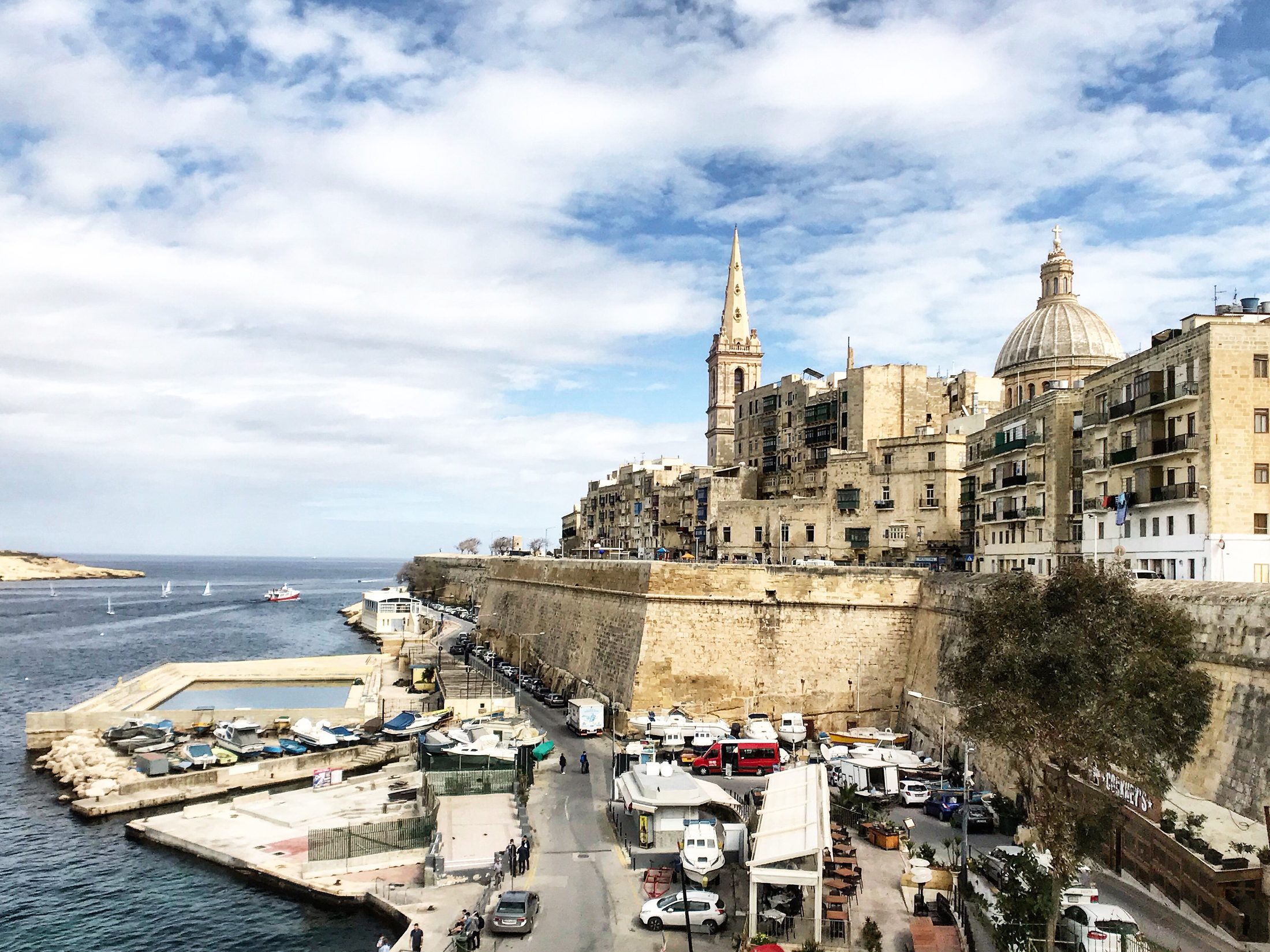
Across Grand Harbour, Birgu—also called Vittoriosa—is one of the Three Cities. Fortifications and narrow residential streets make it a quieter counterpoint to the capital.
Mdina and Marsaxlokk
Mdina, Malta’s former capital, is a walled hill town of stone lanes and restrained façades. Arriving early or towards evening preserves the silence for which it is known.
Marsaxlokk is a working fishing harbour in the south, recognisable for colourful boats along the waterfront. Sliema, by contrast, is a dense commercial and residential base connected to Valletta by ferry and bus.
The Palace Hotel
I stayed at The Palace Hotel in Sliema. Its upper floors contain a rooftop pool and restaurant with views towards the harbour. The themed suite in which I stayed used a deliberately retro design and opened onto a private terrace.
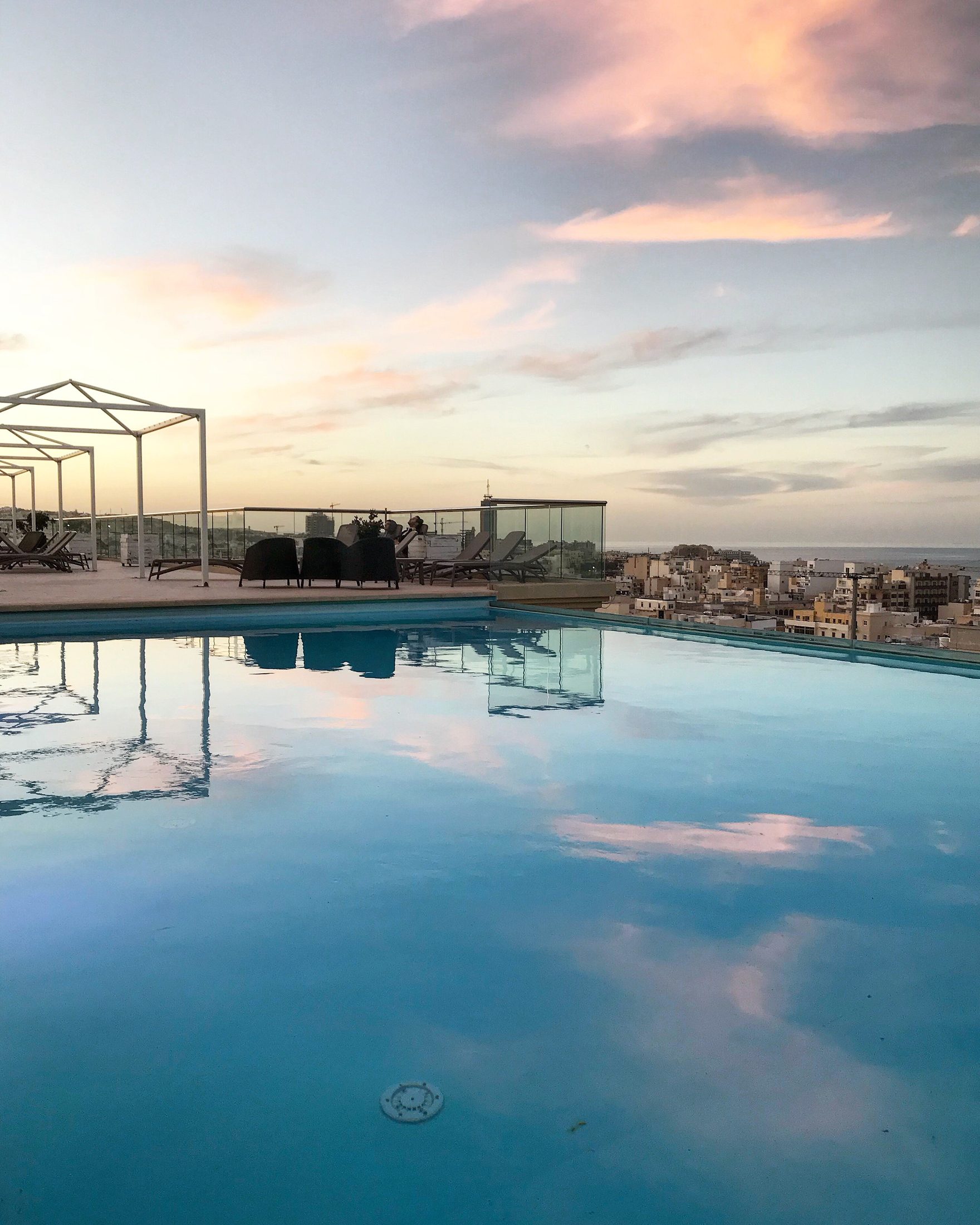
TemptAsian Rooftop Restaurant serves an Asian-influenced menu beside the upper pool, with the city and water visible from the dining room.
The stay and dinner were hosted by The Palace Hotel. The account and opinions remain my own.