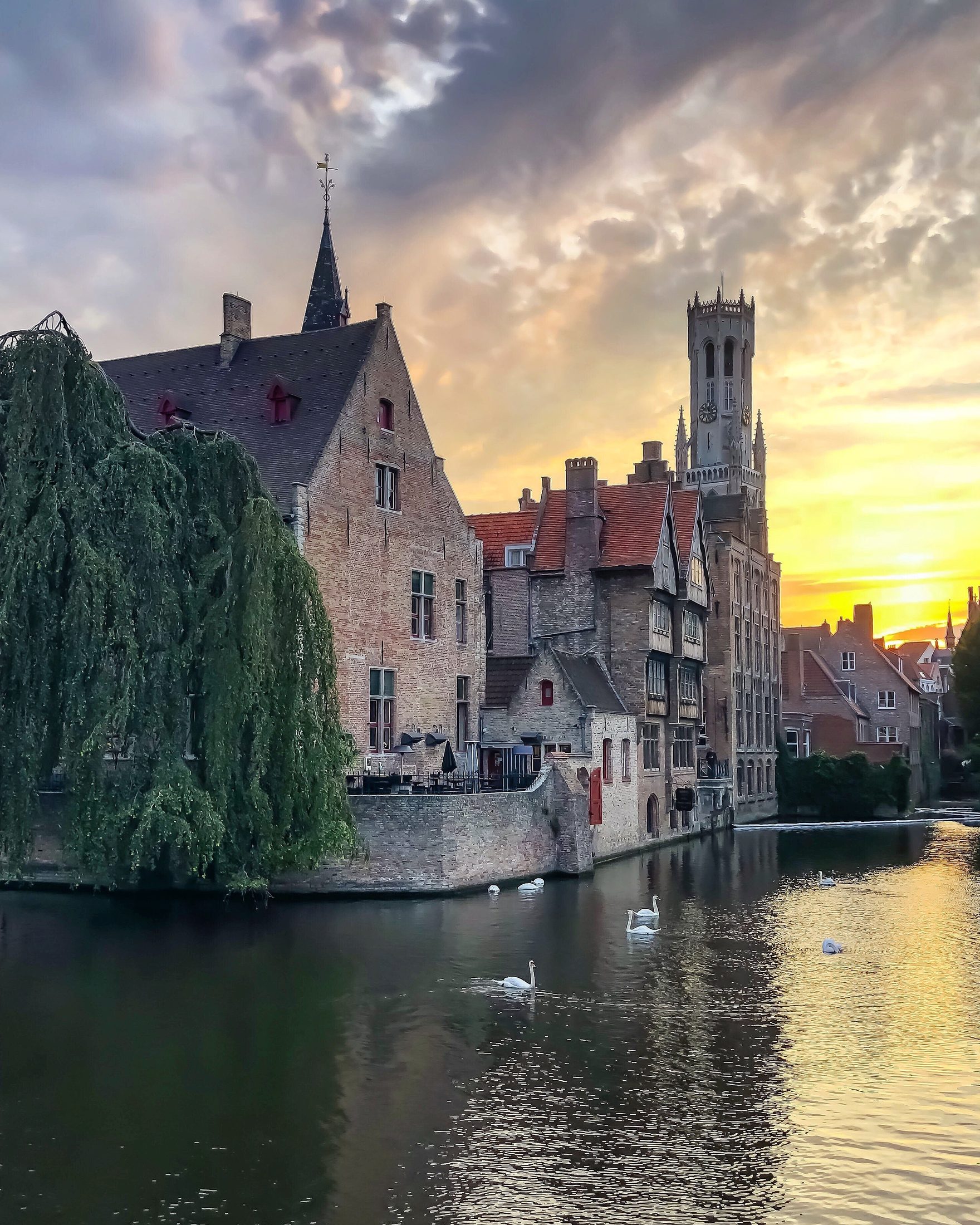
Flanders occupies the northern part of Belgium, and its rail network makes Ghent and Bruges straightforward additions to a stay in Brussels. I lived in the capital for several months and returned to both cities more than once, sometimes for a day and sometimes at a slower pace.
Brussels
Grand-Place is the natural starting point in Brussels. The guild houses and Town Hall form a monumental enclosure that changes noticeably with the light, particularly towards the end of the day.
The European Quarter has a different scale and purpose, with the European Commission and Parliament among its principal institutions. Sablon is more intimate: galleries, antique shops and the weekend market occupy the streets around Place du Grand Sablon. For a wider green space, Parc du Cinquantenaire extends around its triumphal arch and museums.
Ghent
Direct trains connect Brussels with Ghent. From St Michael’s Bridge, the historic towers align above the centre and the view opens towards the river. Graslei and Korenlei follow opposite banks, lined with stepped façades, cafés and places to sit beside the water.
Ghent feels lively without losing the practical scale of a smaller city. Its main sights can be explored on foot from the station area with public transport used for the longer connections.
Bruges
Bruges is compact and suited to walking. Cobbled streets, canals and stone bridges define the centre, while a boat trip offers a lower perspective on buildings that are less visible from the street.
Because the busiest routes can become crowded during the day, an overnight stay or an early arrival makes a real difference. For a more detailed itinerary, see the separate Bruges guide.
Train schedules and prices should be checked directly with Belgian rail operators before travelling, especially on weekends and public holidays.