The Cotswolds offer a quieter counterpoint to London: rolling countryside, market towns and villages built from warm local stone. Travelling without a car requires some planning, but Castle Combe, Bibury, Cirencester and Bath can be combined using trains, buses and occasional taxis.
Castle Combe
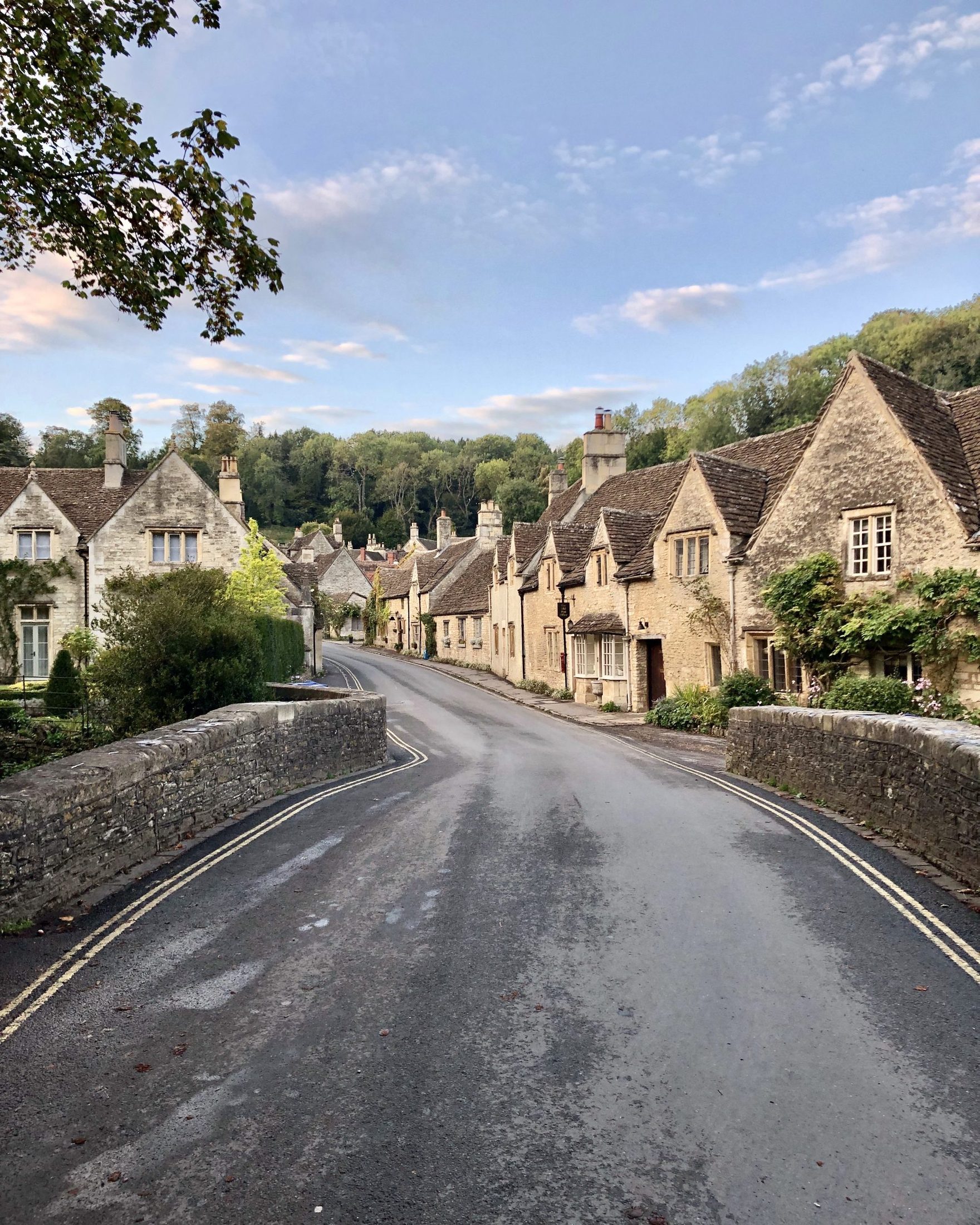
Castle Combe lies in Wiltshire. From London, travel first to Bath or Chippenham, then continue by local bus or taxi. Walking downhill through the village brings you past the old pound, Dower House, Market Cross and St Andrew’s Church before reaching the bridge over the Bybrook.
Beyond the church, a path leads through the grounds towards the Manor House. The remains of the castle lie north of the village, although the streets and stone cottages are the principal reason to visit.
Bibury and Cirencester
We used Cirencester as our base and reached Bibury by bus. Return services become limited later in the day, so check the timetable carefully or plan for a taxi after sunset.
Bibury is best known for Arlington Row, a line of former weavers’ cottages beside the River Coln. The trout farm, St Mary’s Church and the paths along the water add enough variety for a relaxed half-day. The Swan, a former coaching inn on the riverbank, is a convenient place to stop for food or a drink.
Bath
Bath is straightforward to reach by train from London and works well as the gateway to this route. The Roman Baths explain the origin of the city’s name and remain its essential historic site. Bath Abbey, Pulteney Bridge, Parade Gardens and the Royal Crescent can all be connected on foot through the compact centre.
The Cotswolds are easier by car, but public transport makes a slower itinerary possible. The key is to choose a limited number of villages, check evening services and avoid treating the region as a rushed day trip.